
PROJECT DESCRIPTION
This project marked our first collaborative assignment of the year, offering an exciting opportunity to connect with students from other MA courses at LCC and exchange our diverse skills, interests, and knowledge. We were presented with three different briefs, each proposing a distinct approach to workflow and creative development.
Our group consisted of four MA Visual Effects students — Saahil, Nora, Lex, and myself — along with one MA Computer Animation student, Maria. We chose the brief focused on motion capture, as we were all particularly interested in exploring the creative and technical possibilities of this technique. Additionally, we were keen to experiment with MetaHuman creation, a powerful tool within Unreal Engine.
Throughout the project, we developed not only our collaborative skills but also our ability to build a compelling outcome step by step. Starting from an initial, loosely defined concept, we progressed through storyboarding and research, gathering visual references and inspirations. This process then evolved into the development of characters, their visual identities, and the surrounding environments, resulting in a cohesive and engaging final piece.
THE STORY
Our animation “Ascension” is a story about a female warrior who stands on the brink of vengeance, but a final lesson from her master and memories of her training force her to confront the true meaning of strength and restraint. Choosing mercy over violence, she walks away transformed, her inner balance manifesting as life and energy flowing through the world around her.
RESEARCH AND DEVELOPMENT
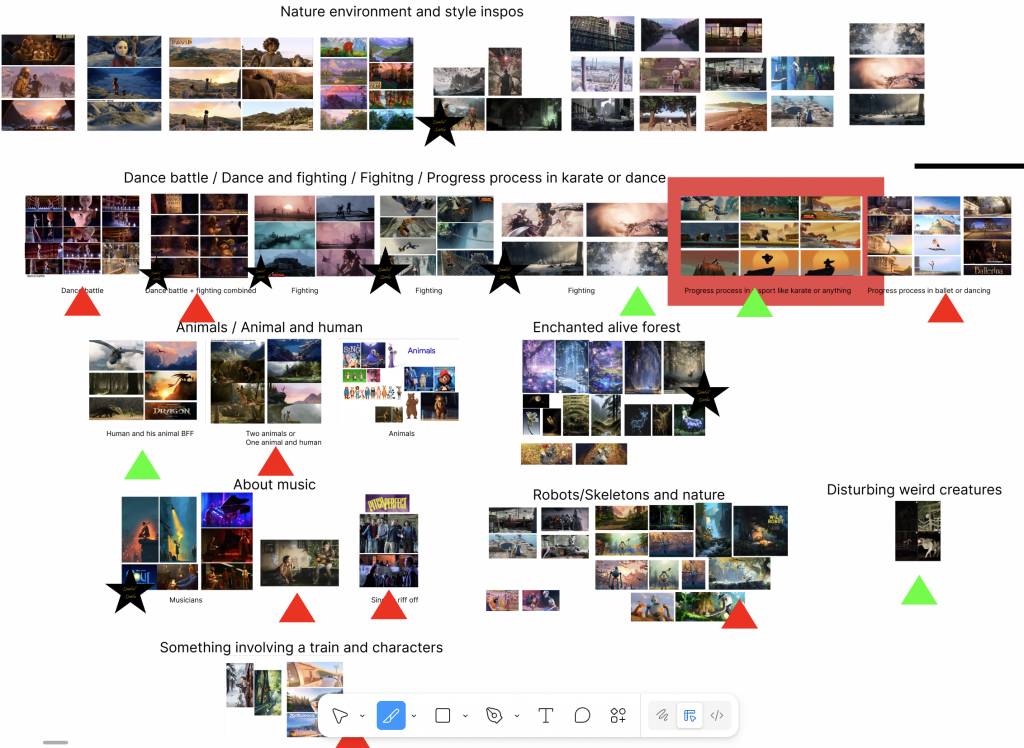
At the beginning of the project, we all agreed to use Figma as our main organisational tool, which allowed us to stay aligned, track developments in real time, and contribute seamlessly to each stage of the project.
After carefully discussing our ideas in digital space at LCC, we decided to move forward with a story about a warrior who is training in Kung Fu in various locations. That way, we could really make use of motion capture, as well as showcase our skills in environment creation using Unreal Engine 5.
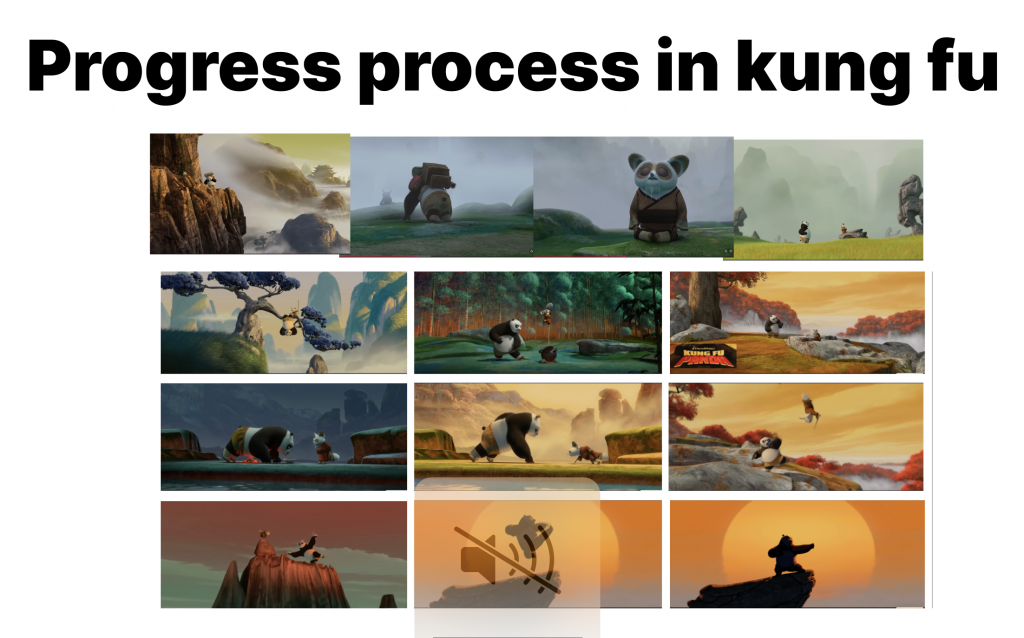
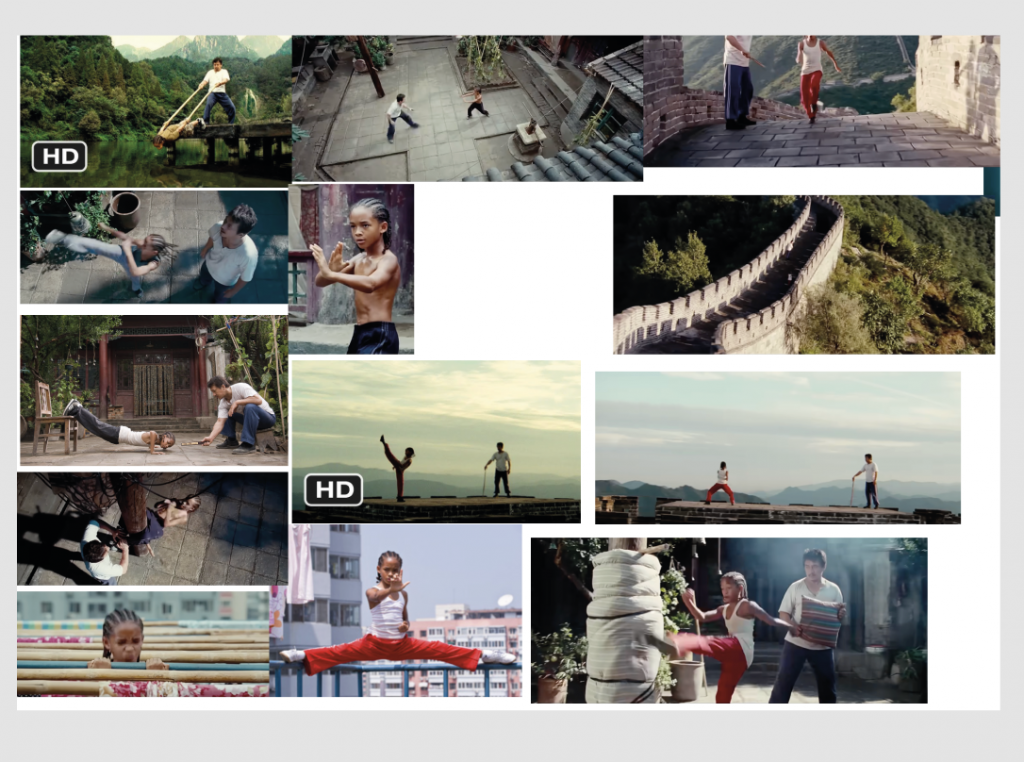
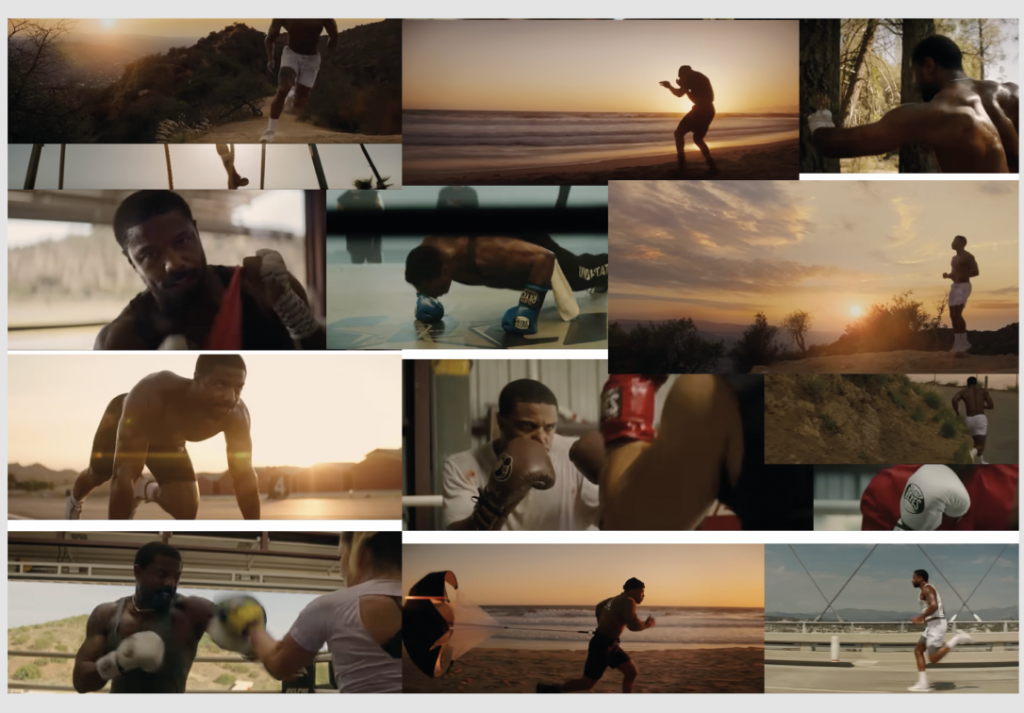
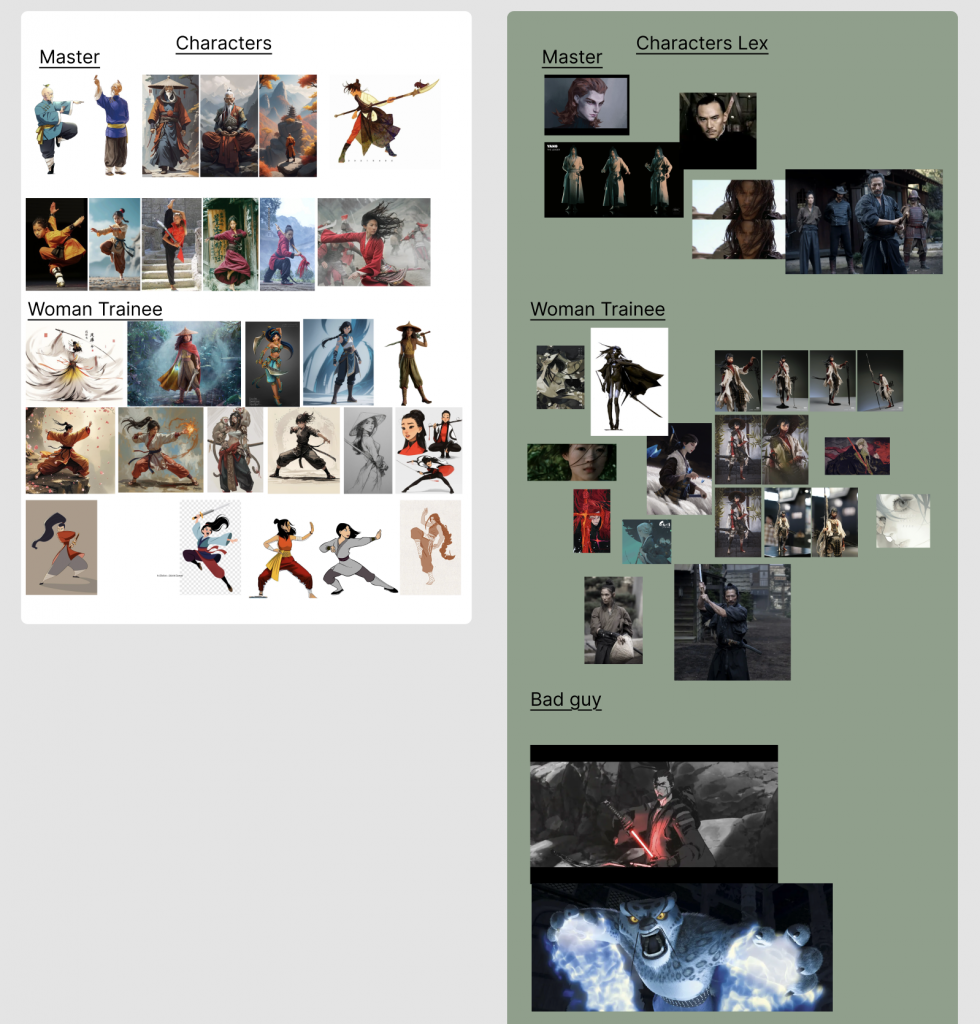
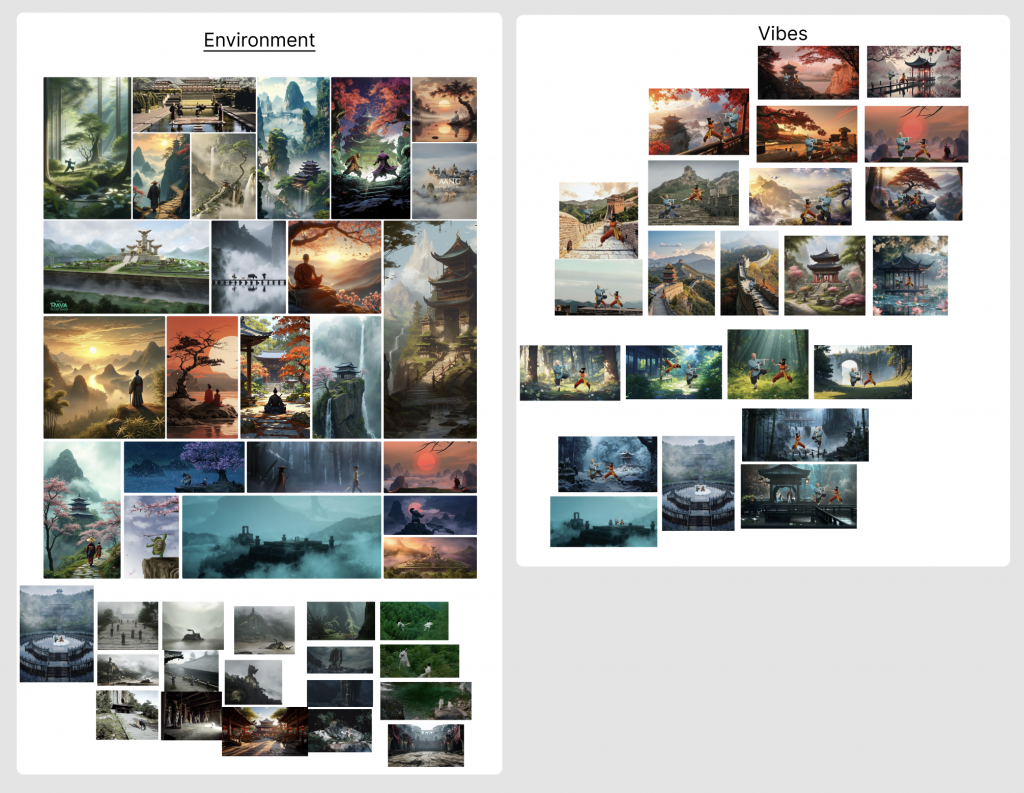
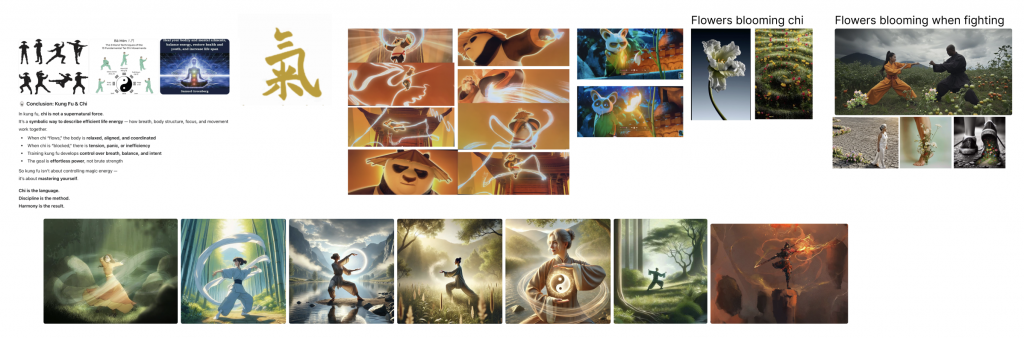
We began working on the project by uploading images of how we see the environments and animation looking like onto Figma. Taking inspiration from well-known films and different websites made it easier for us to see how each group member imagined the project, and to make important decisions about the general atmosphere and look.

SCRIPT AND STORYBOARD
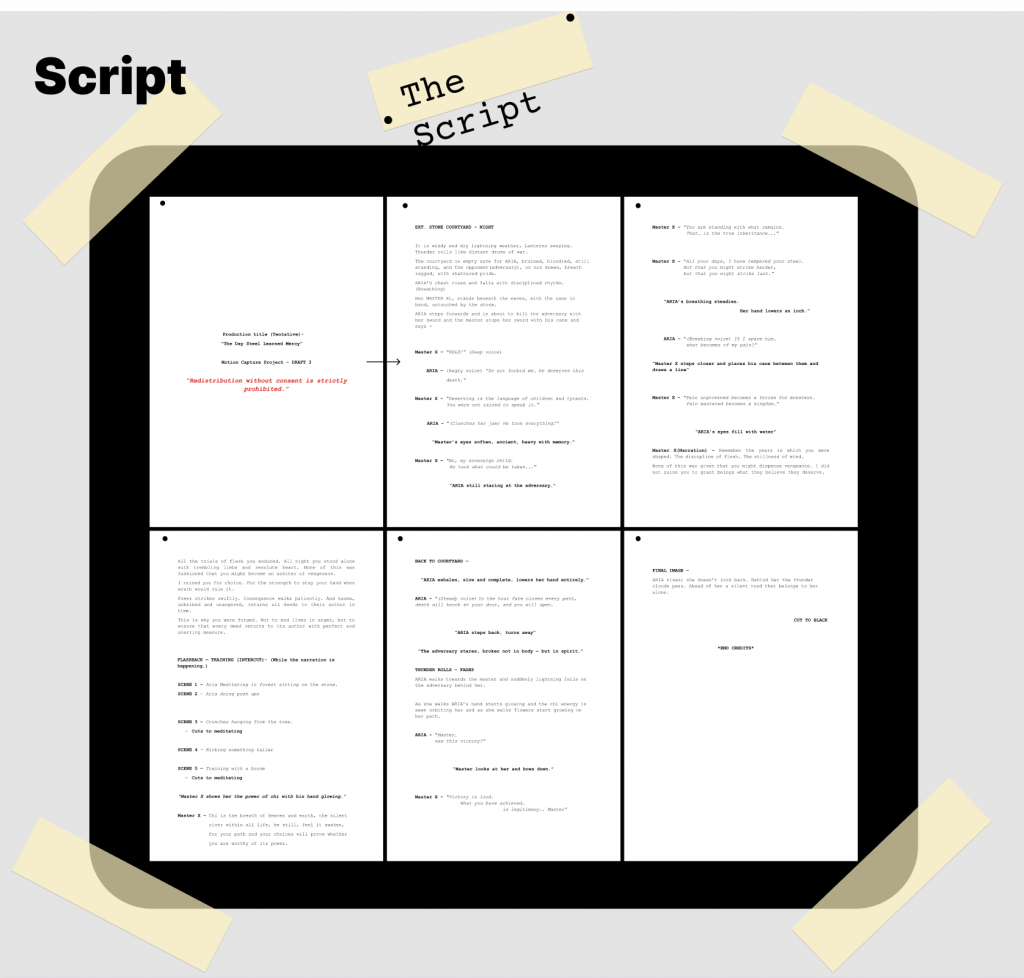
After finishing the brainstorming process, we moved to thinking about the story of our animation and the message that we aimed to convey. The script was initially written by Saahil and then, after some discussion, further modified by all the group members.
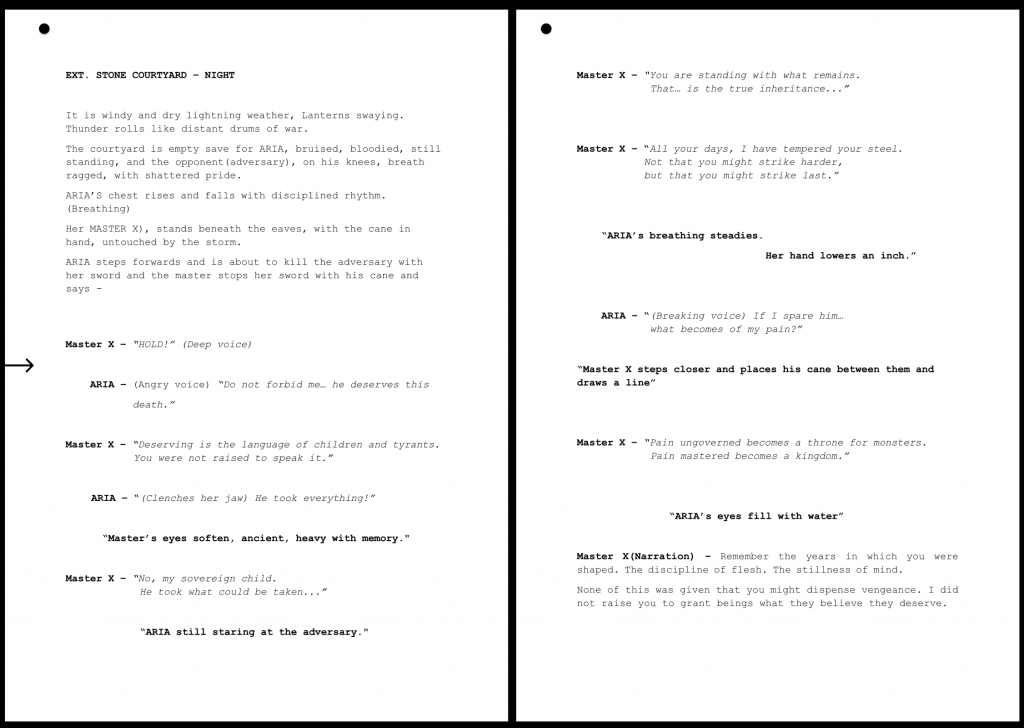
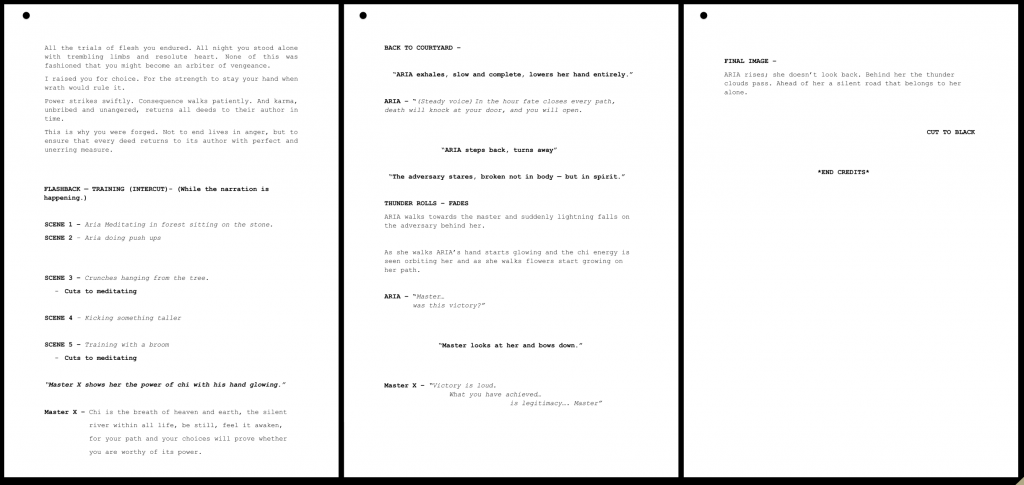
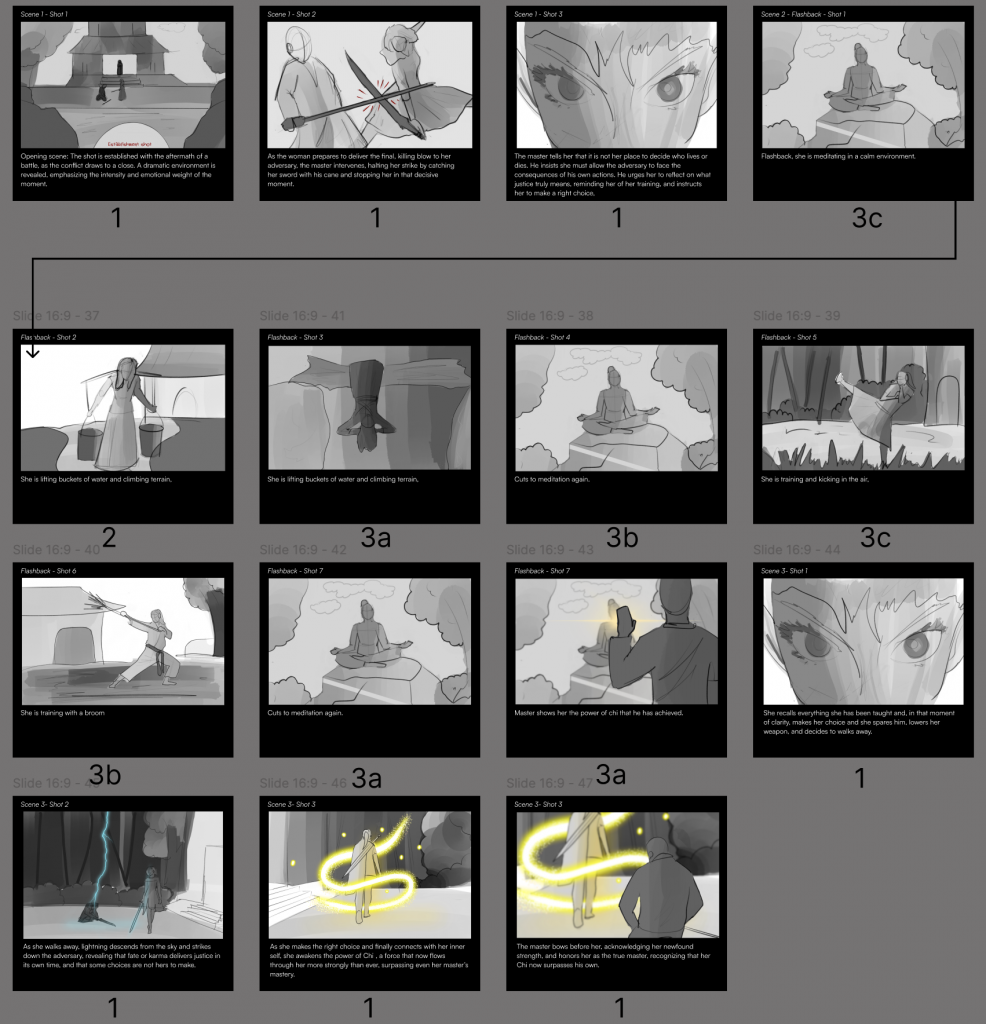
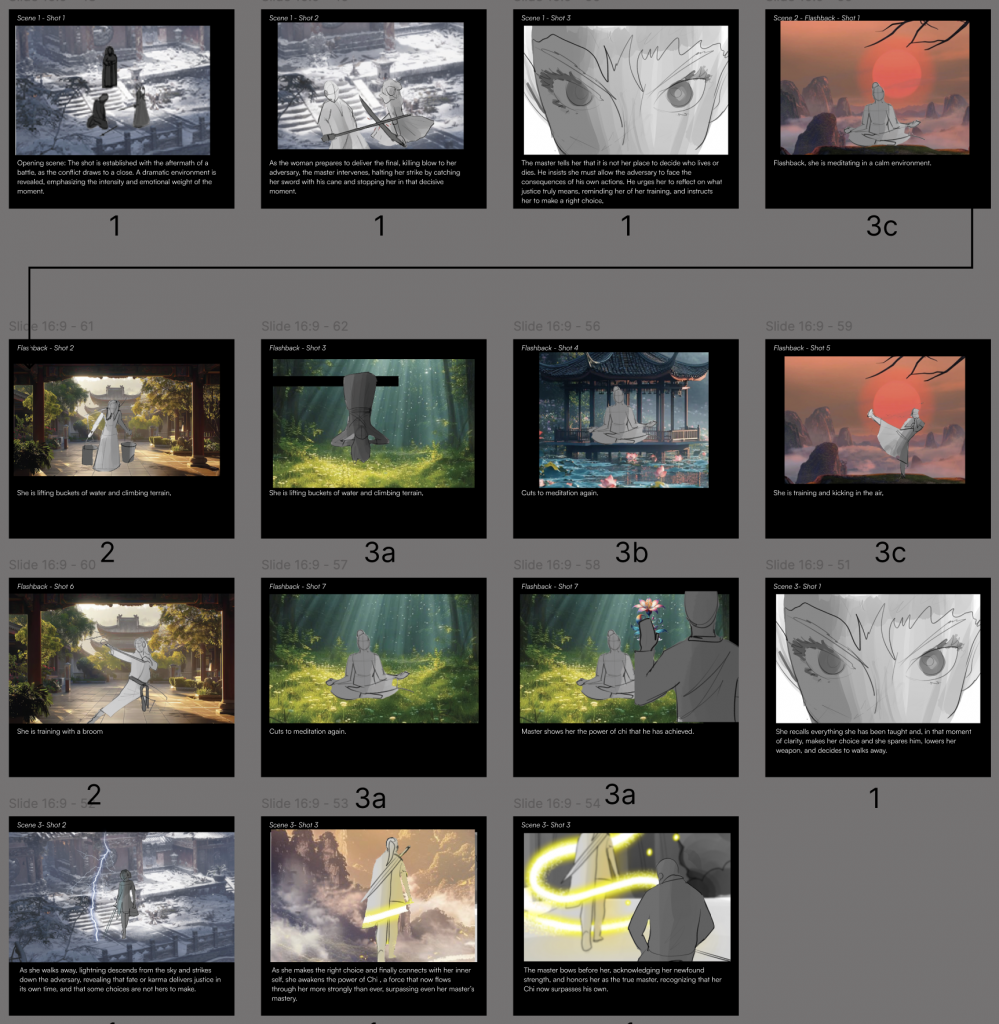
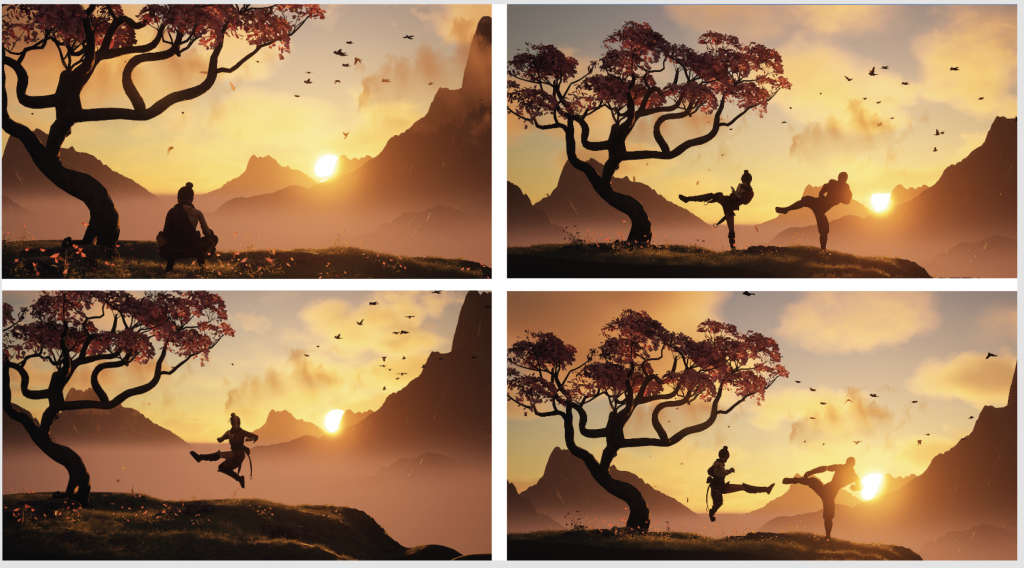
When we had the story, we could create a storyboard, which was first drawn by Saahil, and then Nora made the collages in Photoshop. This was a very important step, as it helped all of us to imagine the final outcome of this project.
Hand-drawn storyboard
Collage-style storyboard
TASK DIVISION AND COLLABORATION
Then, we divided our tasks based on what we all feel most confident in, or on what we wish to develop our skills in and explore.
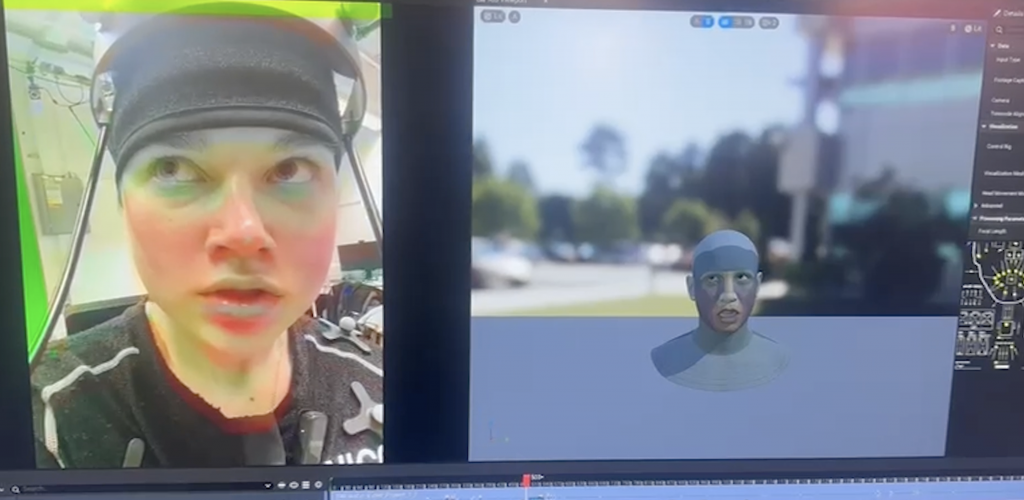
Saahil developed the script and the storyboard, as well as did facial capture data transferring, dialogue processing, sound design in Davinci, and compositing in Nuke.
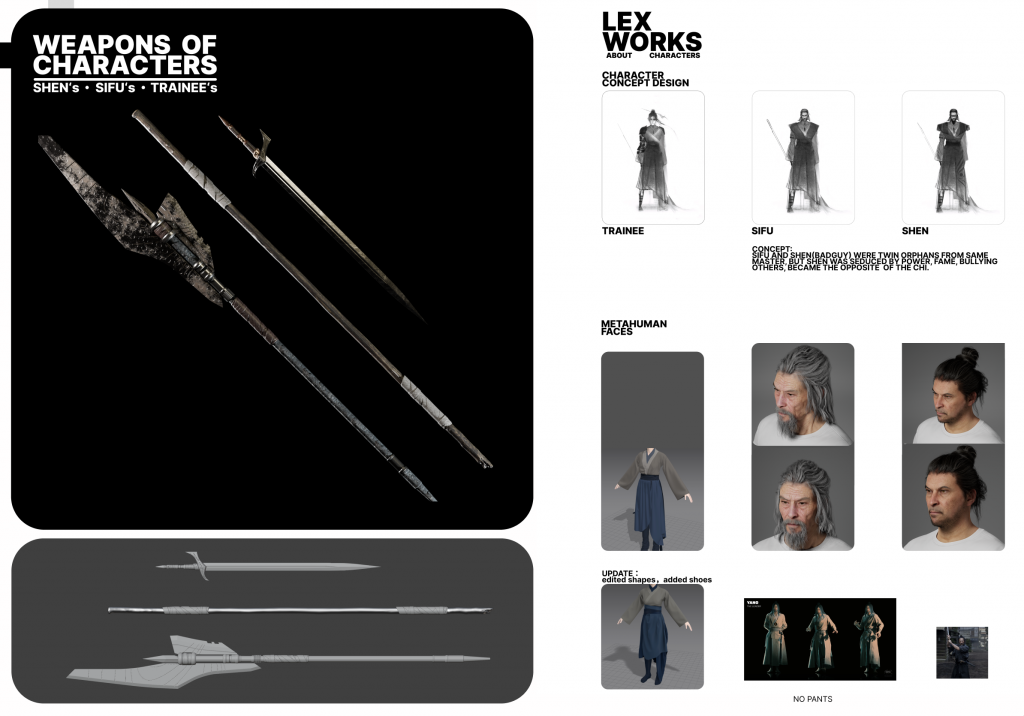
Lex designed the male characters, and all outfits, as well as modeled the props in Blender.

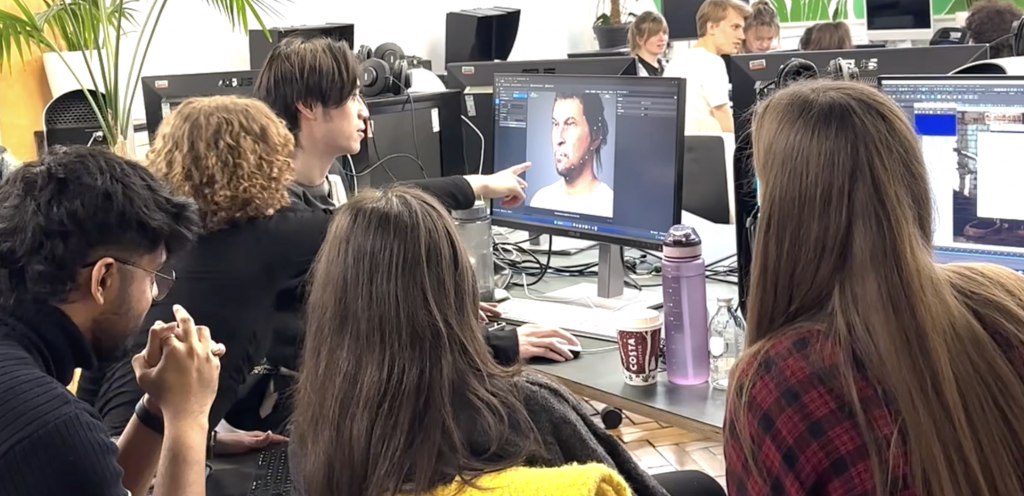
Nora did the Environment design for the start and ending shots, as well as the sunset scene. and cloth simulation, and was responsible for pre-production, concept and look design.
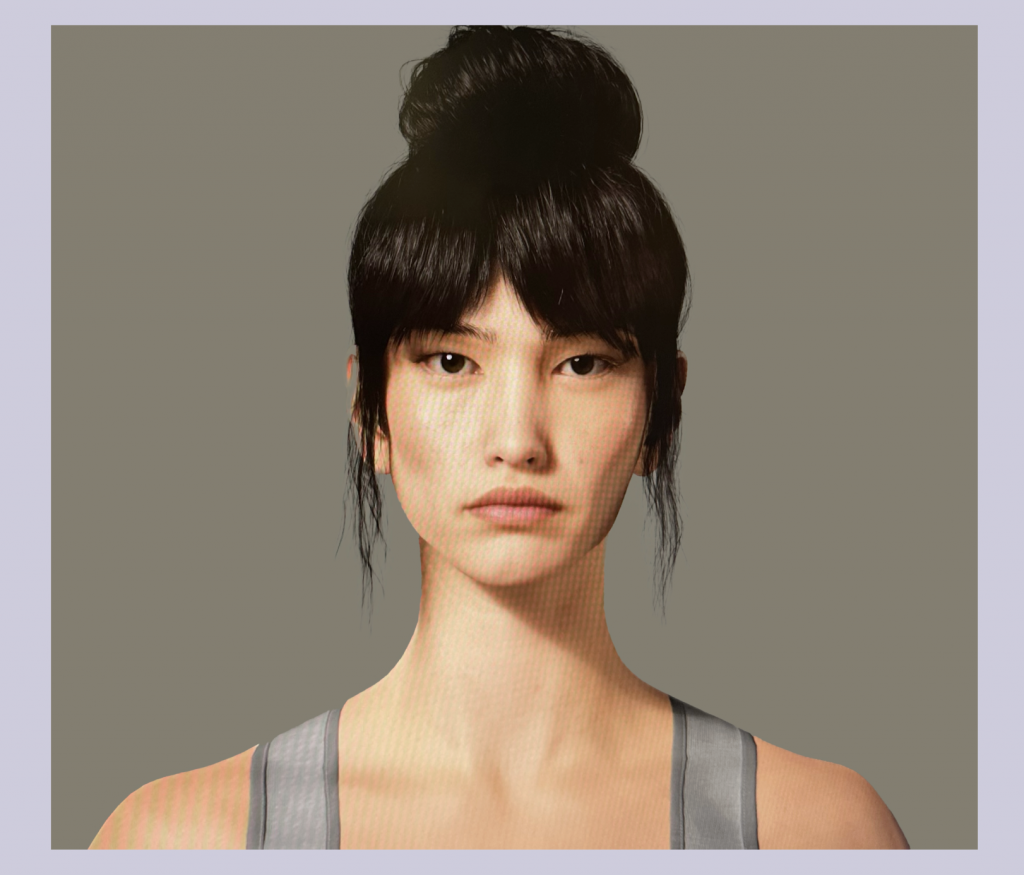
And Maria developed the female character design, did the retargeting, animation correction and attached all the props
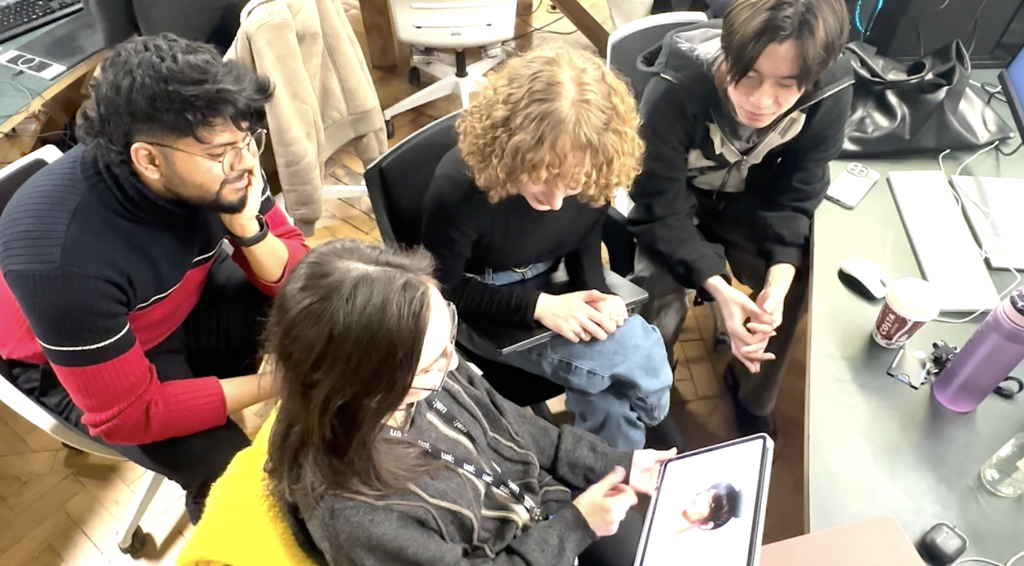
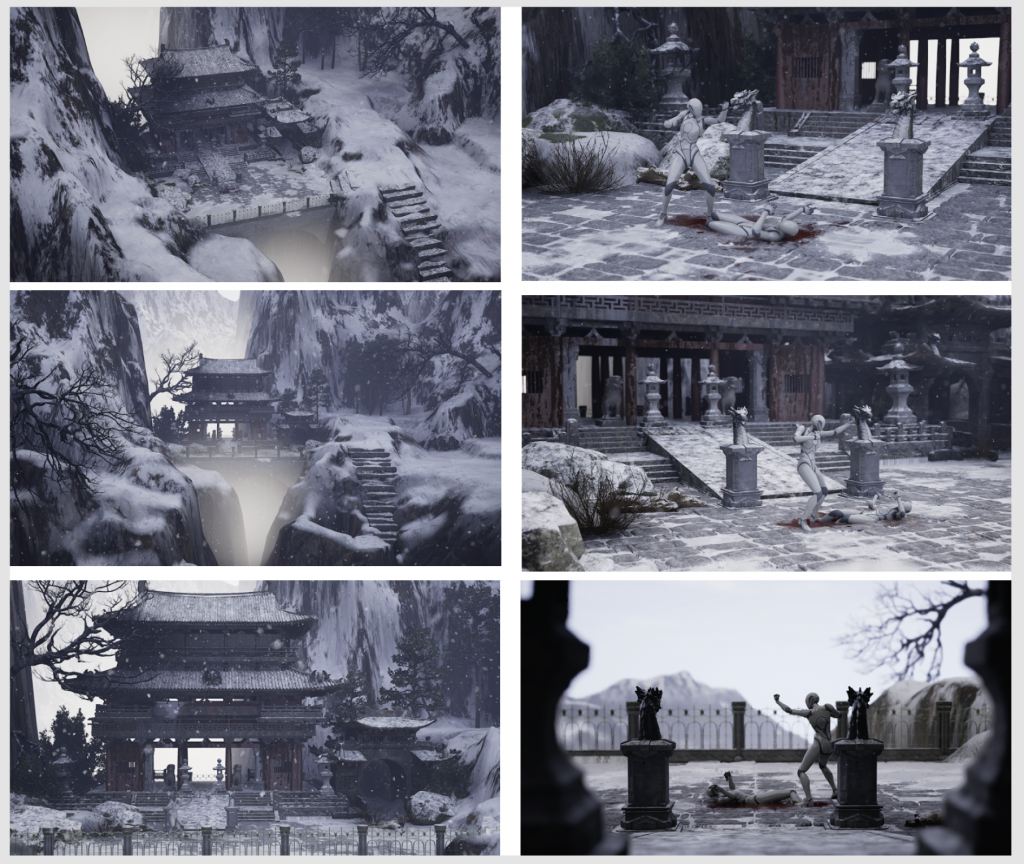
My tasks, on the other hand, included taking care of the environment design of the forest, courtyard and lake shots, cloth simulations and visual effects in Houdini and Unreal Engine.
MOTION CAPTURE
After establishing the story and all movements of our characters, we booked the motion capture lab, where we were able to experiment and record everything that was needed.
MY CONTRIBUTION AND WORK PROCESS
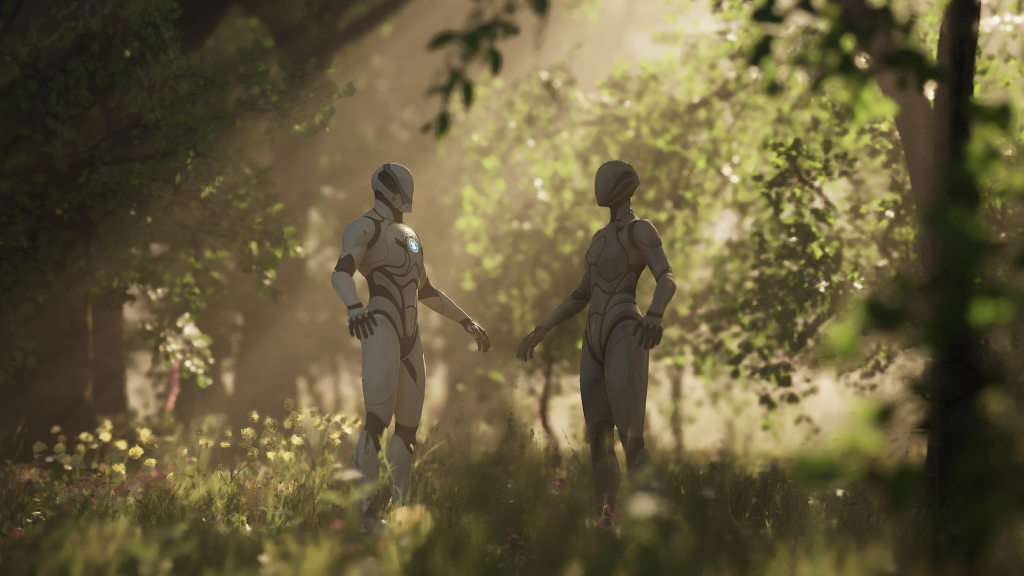
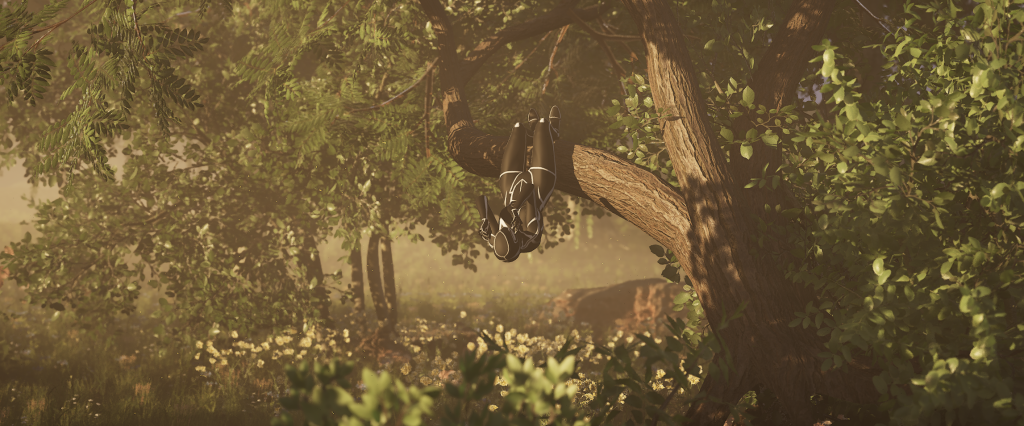
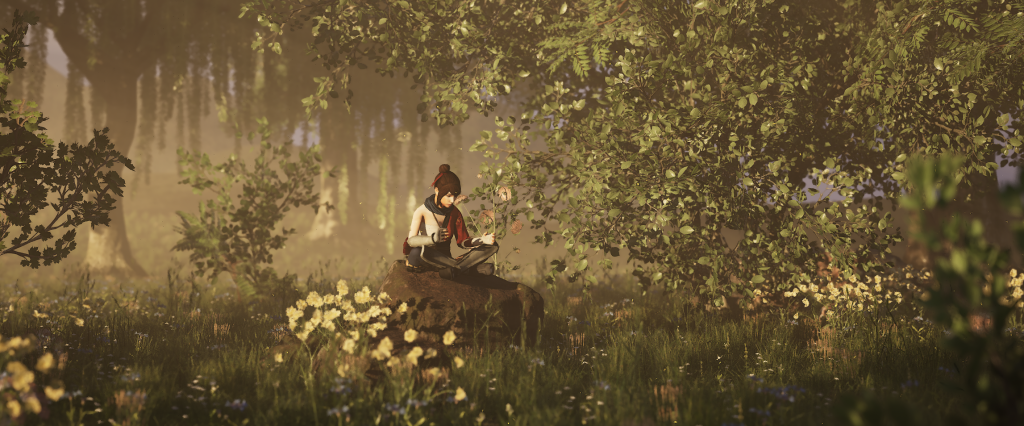
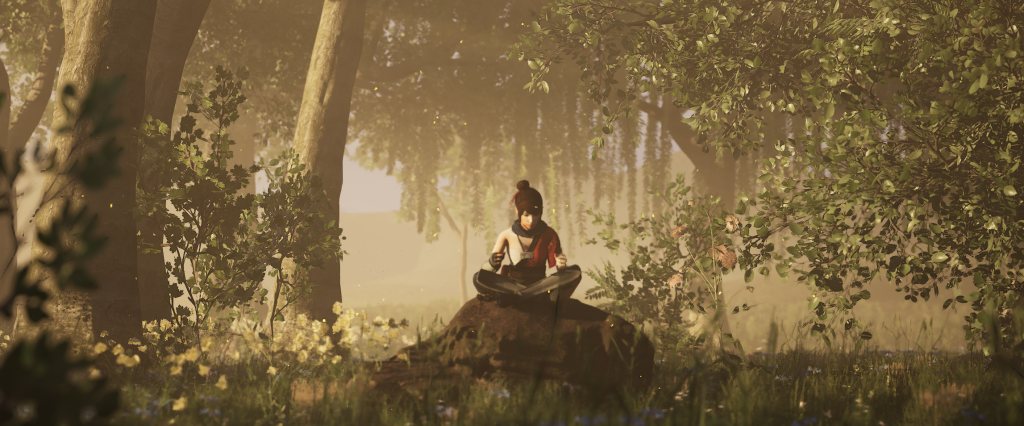
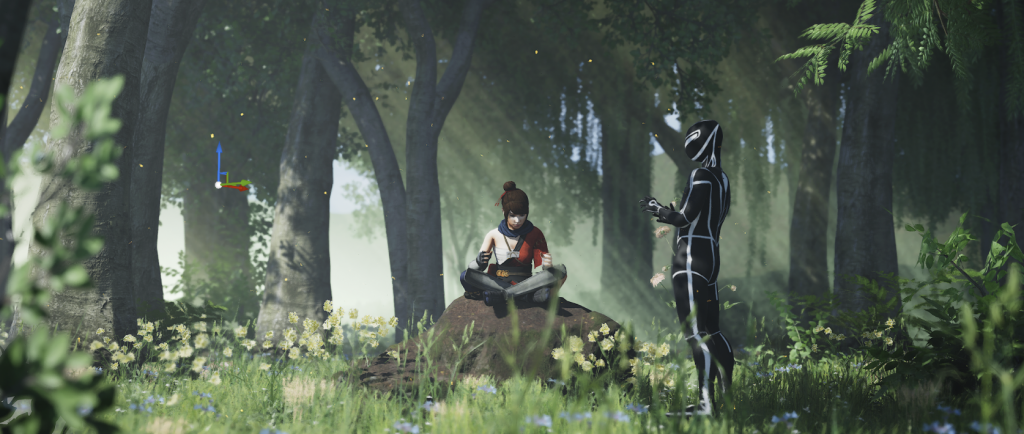
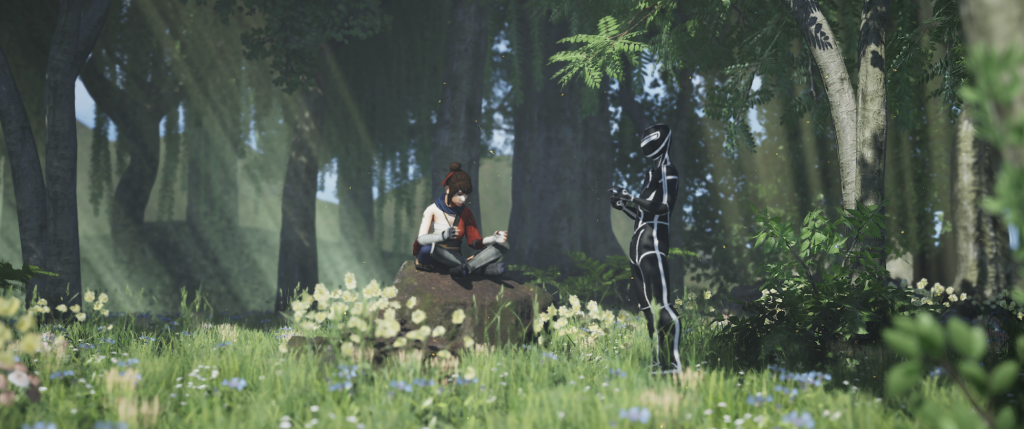
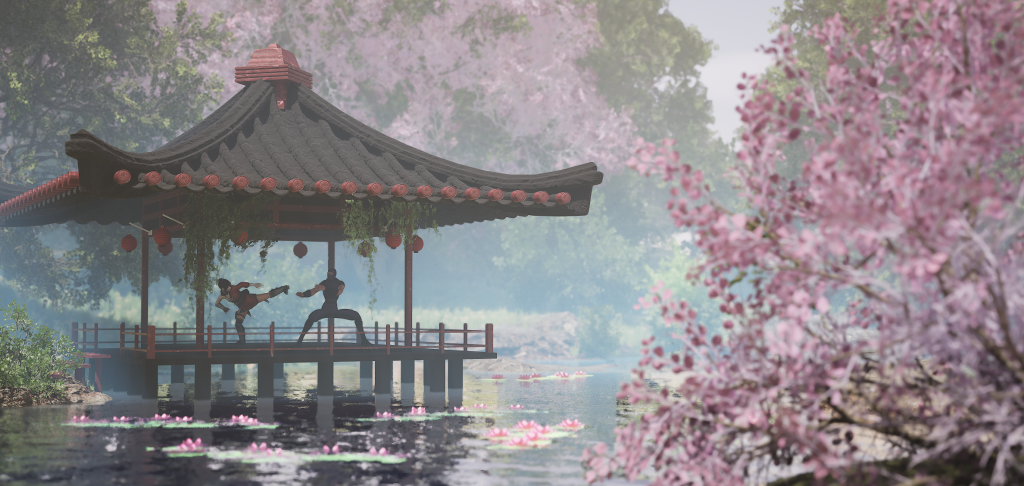
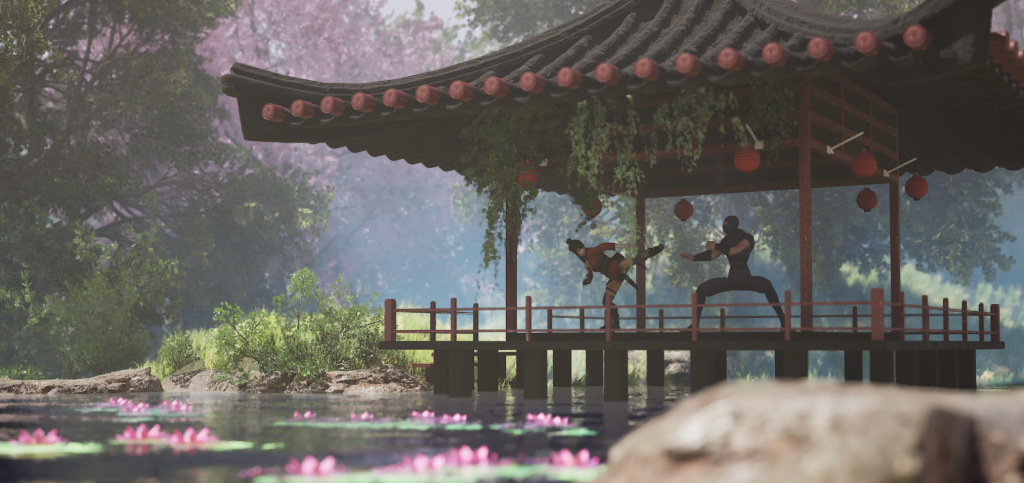
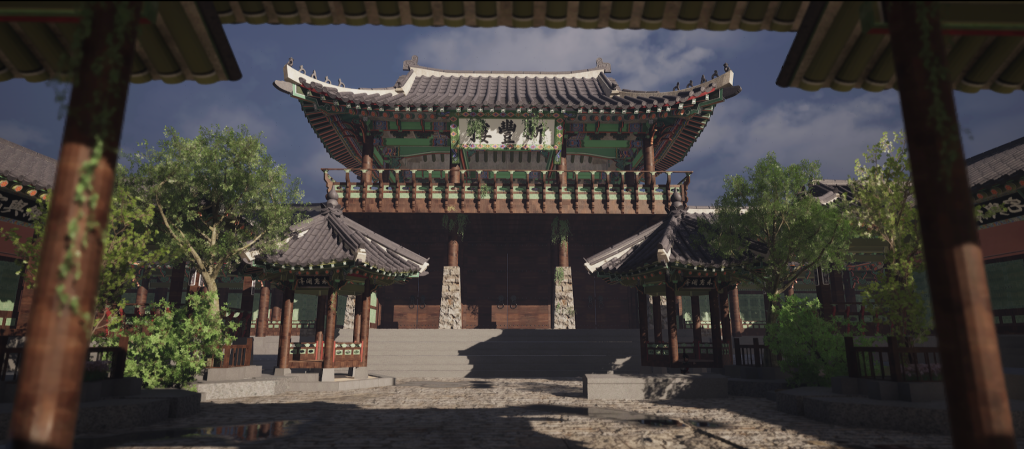
In the creation of our animation “Ascension”, I was first mainly responsible for the Environment Design of three scenes, where the main character, Aria, was training with her Kung Fu master – a magical forest, a courtyard and a lake shots, where the practice would be happening in a gazebo. All environments were made in Unreal Engine 5.
I began with gathering ideas and references that illustrated my vision in order for other group members to be able to picture it as well.
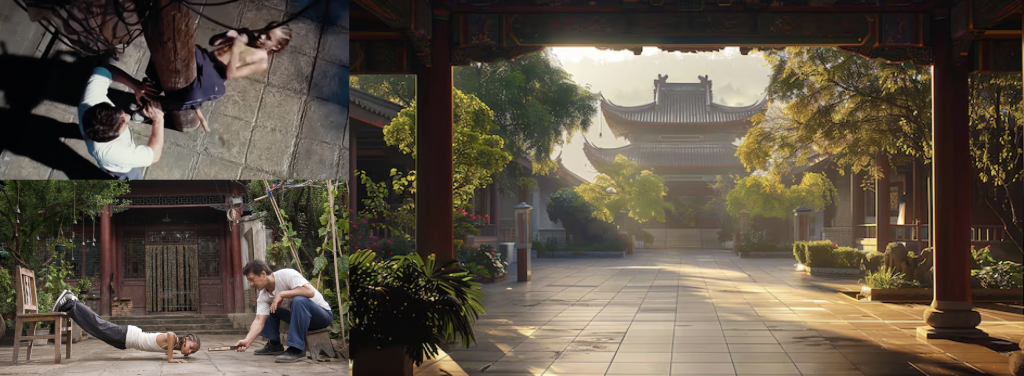
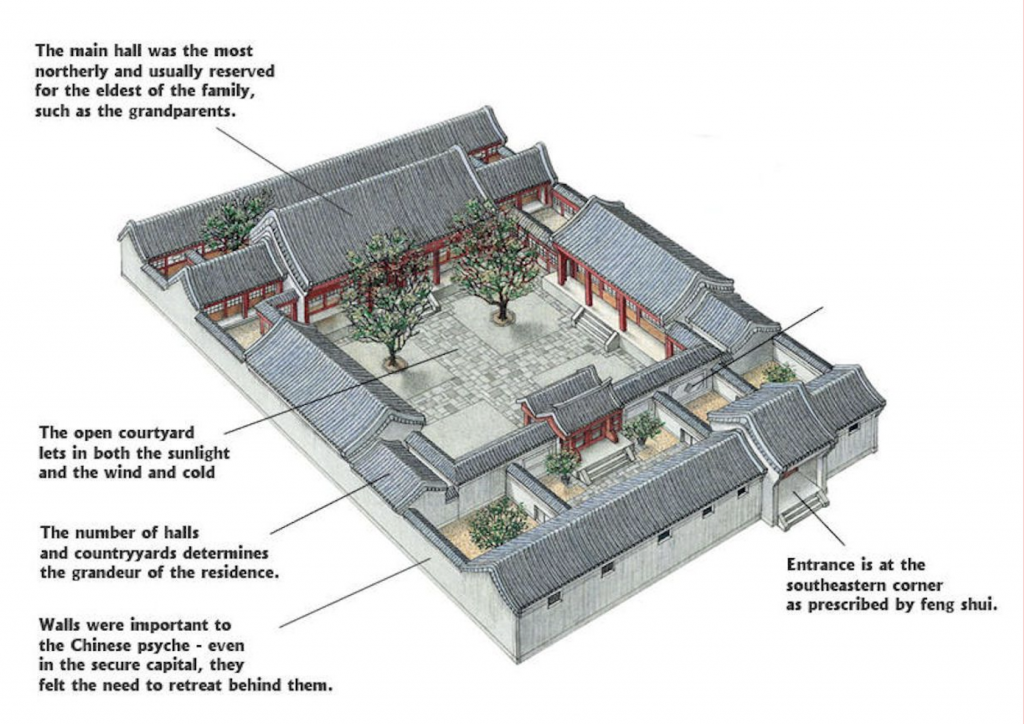
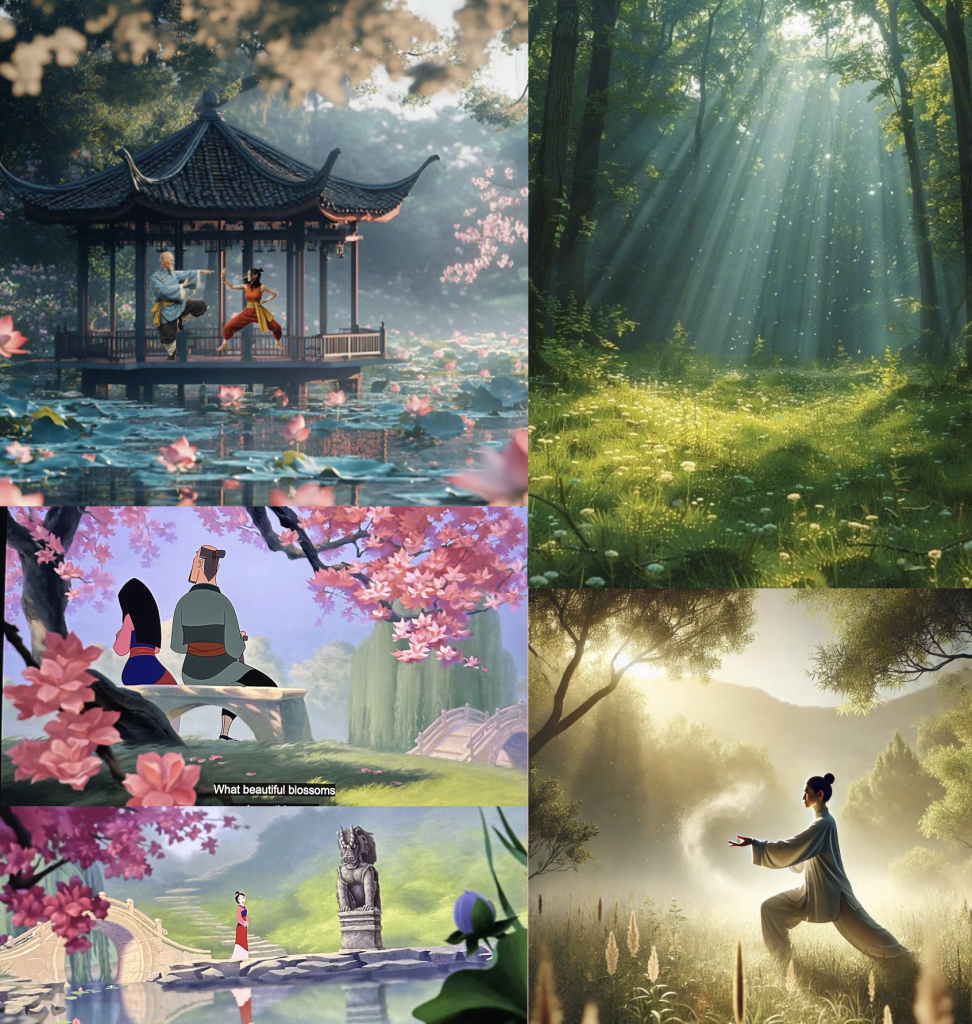
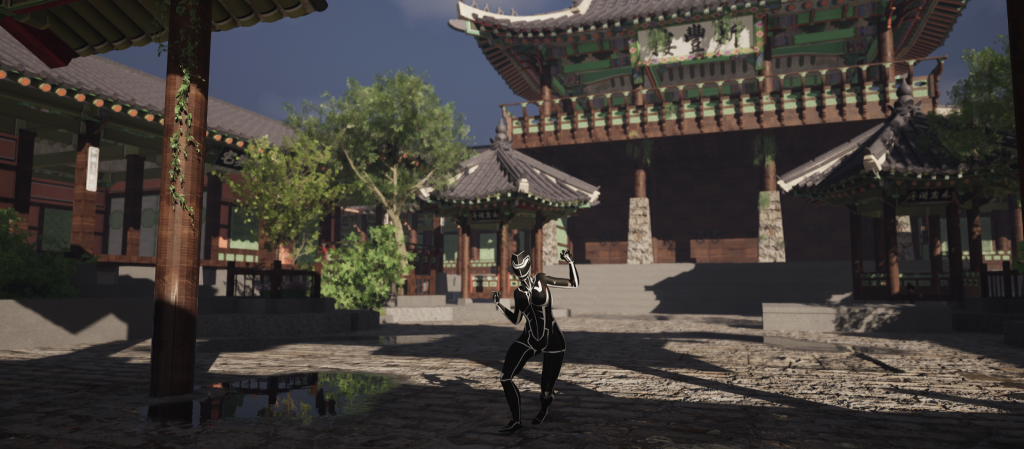
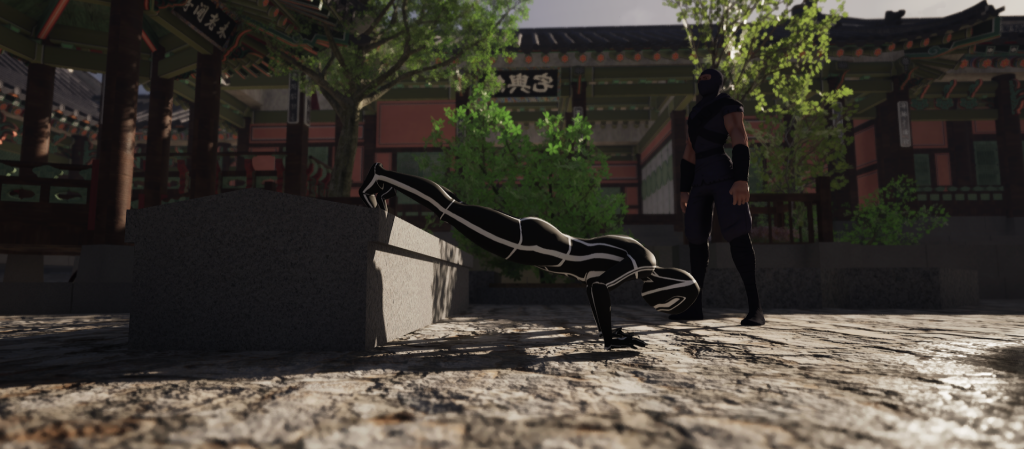
Later, I came up with my proposal which was discussed with the other group members, and iterated a few times to ensure a result which we all were happy with. I used a female warrior character from Mixamo which resembled our main protagonist and downloaded a few ready animations so that I could put them inside my environments. This, and using the Vicon model with our mocap, allowed me to illustrate the scale and position of the characters within the shots.
Forest scene
First iteration
Second iteration
Final design

Lake scene
First iteration
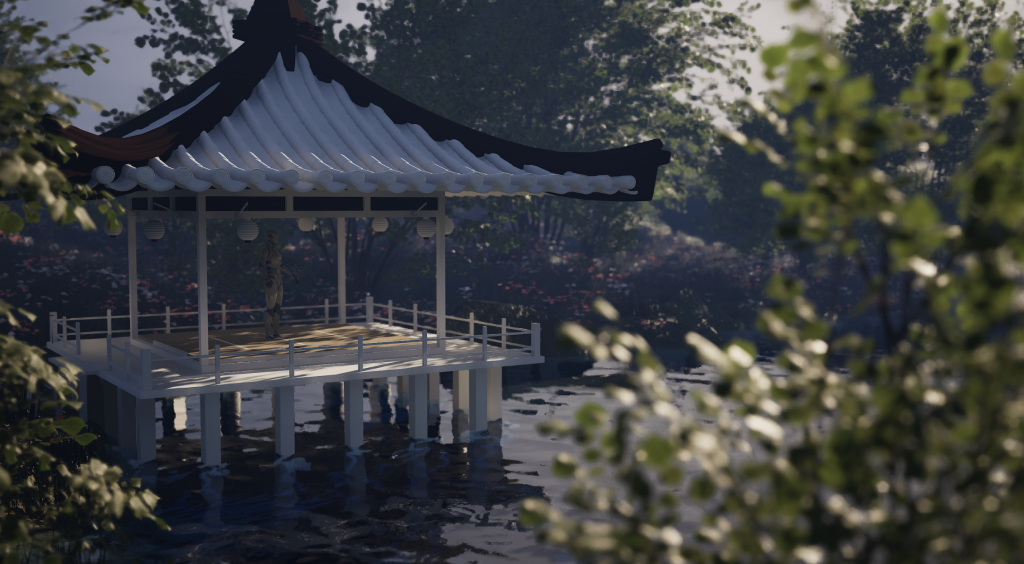
Second iteration
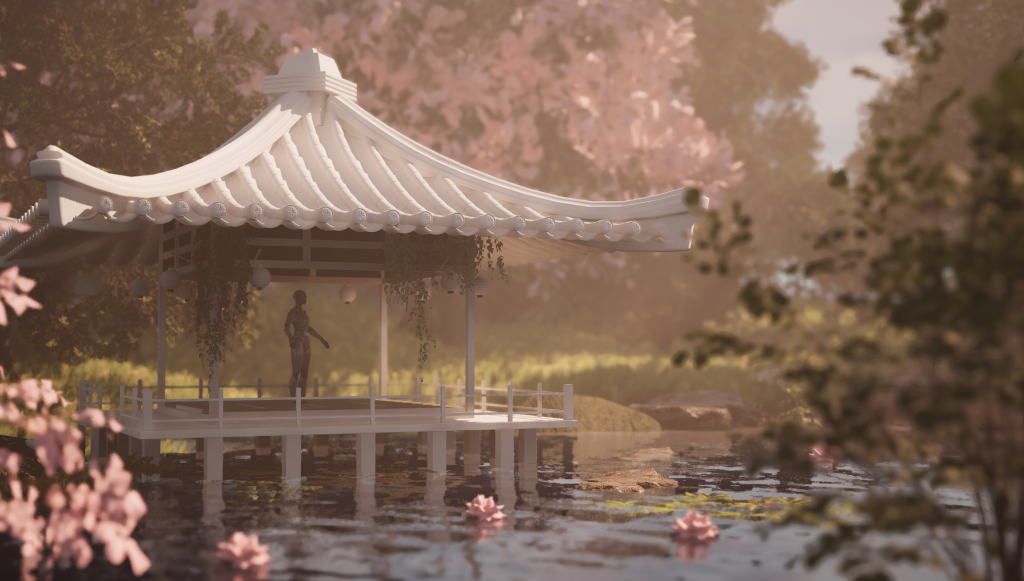
Third iteration
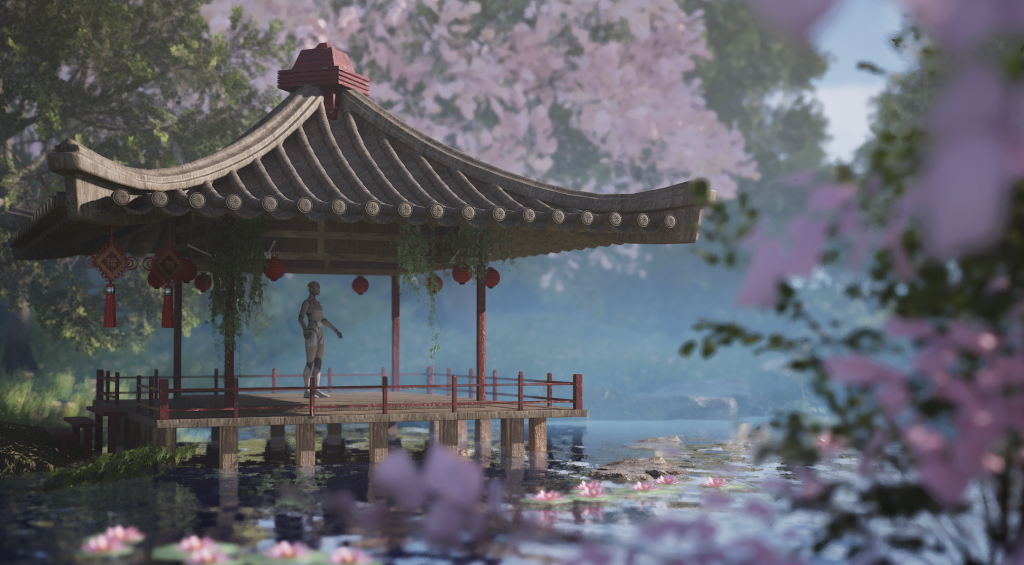
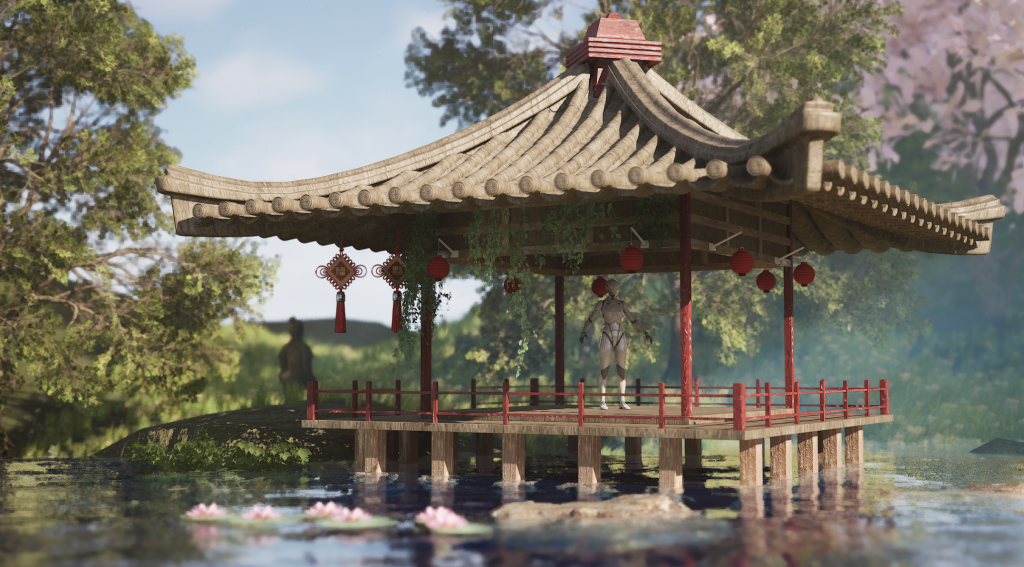
Final design
Courtyard scene
First iteration
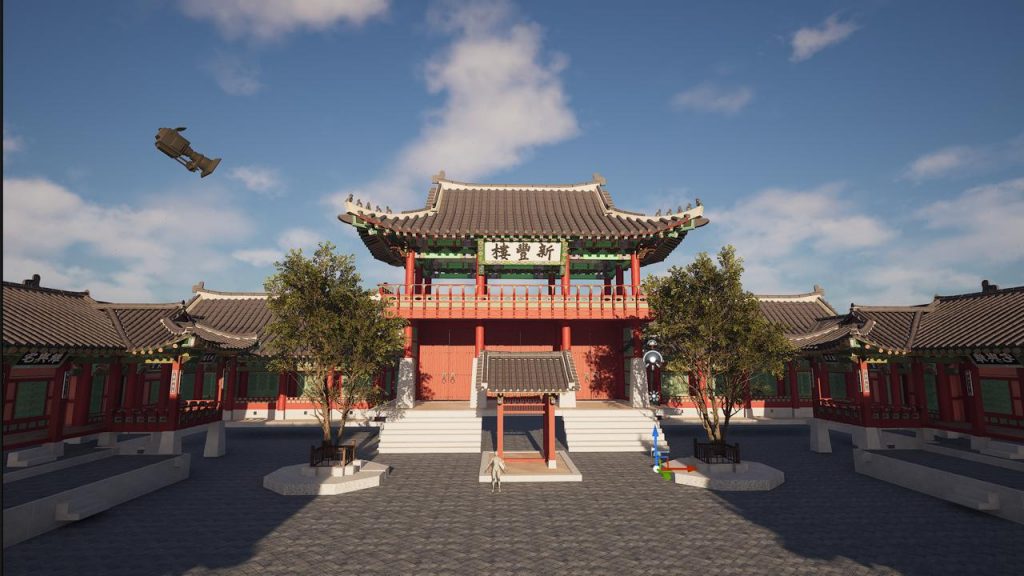
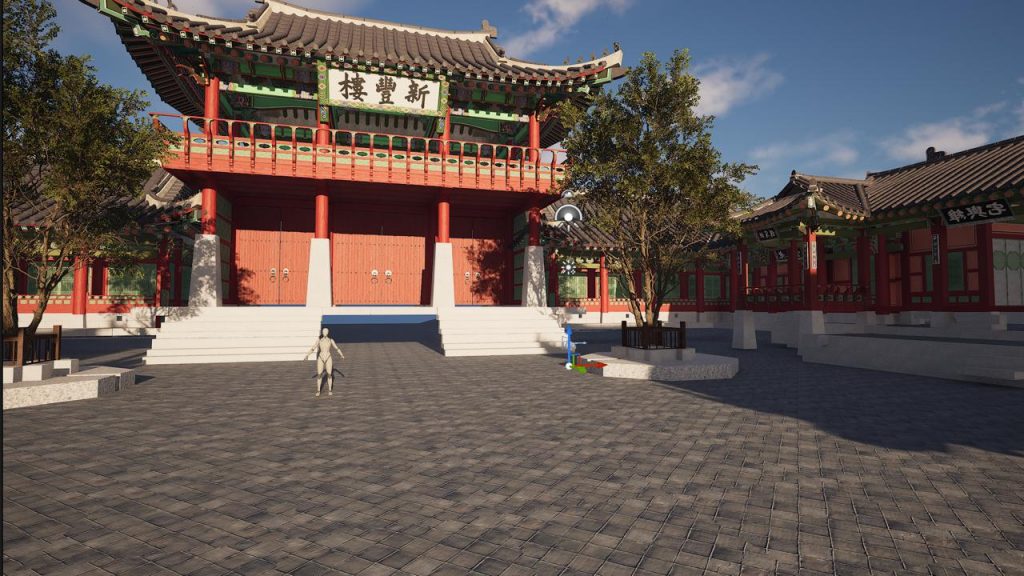
Final design
Moreover, I was responsible for some visual effects such as particles flowing around the main character at the end, made using a Niagara system in Unreal Engine, or a blooming flower which was created in Houdini.
FINAL OUTCOME
MAKING OF
LESSONS AND REFLECTIONS
The animation was successful in achieving a cohesive visual narrative, particularly in the character development, storytelling, and overall aesthetic direction. Our collaborative workflow was a strong aspect, as consistent communication and feedback allowed us to refine ideas effectively and maintain a clear vision throughout the process.
One of the main challenges we encountered was implementing cloth simulations in Unreal Engine, which proved more complex and time-consuming than anticipated. This affected our workflow and required us to adapt our expectations and problem-solving strategies. In retrospect, allocating more time for technical experimentation earlier in the process, or simplifying certain elements, could have helped mitigate these difficulties.
Overall, the project strengthened our ability to collaborate, adapt to technical challenges, and balance creative ambition with practical constraints. It highlighted the importance of early testing, clear task distribution, and flexibility when working with new tools and techniques.
Looking ahead, this project has strong potential as a portfolio piece, as it demonstrates both our creative and technical abilities within a collaborative environment. It showcases skills in storytelling, visual development, and working with real-time tools, which are highly relevant for roles in animation and VFX.
With further refinement—especially by enhancing technical elements such as simulations, improving the quality of final renders, and dedicating more time to detail—the project could evolve into a more polished and cohesive outcome. Overall, it serves as a valuable foundation for future work and reflects our ability to take a concept from idea to a coherent final product.