PROJECT DESCRIPTION
This project was developed as part of an MA Visual Effects brief requiring the creation of a +/- 1-minute-long animation that integrates live-action footage and CGI. My Exploratory Practice personal project communicates the feeling of missing home, specifically one that you cannot return to. It presents a dream-like, nostalgic scenario, where the protagonist finds herself in a neighbourhood that resembles a typical Polish one. Called by her grandma’s voice, she walks through an old Ruch kiosk’s door and finds herself in her grandma’s house, full of memories of her childhood.
STORYLINE INSPIRATION
Since the beginning of 2026, the life of my 86-year-old grandmother has been shattered into pieces due to her hip accident, which made her completely immobile. Immediately after, she moved into my parents’ house, where she’s being taken care of. Even though we all expected her to, sooner or later, lose her independence, no one was prepared for the feeling of deep longing to visit her in her own house, always full of laughter, love, and warmth. Being very close to my grandma, I spent most of my childhood there, in the countryside, which, even in my adult life, was a symbol of life-heartedness and unconcern to me. Now, the house stays completely empty. Even though my family still has access to it, it feels like an unfamiliar place without my grandma living there.
The project was mainly inspired by the feeling of grief I experienced when visiting the house a few months after she moved out. I felt as if I was moving through a strange, lifeless environment, and as if the place I loved so much was unattainable now; as if I lost my favourite place in the world forever. This animation is like my one last walk through the warmth of her house, powered by her presence, followed by the realisation that it is now a lost place from my past.
PERSONAL GOALS FOR THE PROJECT
HARD SKILLS
- Practice 3D modeling in Maya
- 3D model as many assets as I can
- Understand topology
- Get fluent in using 3D modeling tools provided by Maya
- Learn correct UV unwrapping
- Understand how to correctly UV unwrap assets to ensure correct texturing
- Practice texturing in Substance Painter
- Understand different types of maps
- Practice creating trim sheets
- Texture as much as possible from scratch instead of using pre-made Smart Materials
- Learn how to copy reality through creating realistic, detailed materials
- Environment Design and World-Building in Unreal Engine
- Build a modular asset library and utilize it wherever possible
- Use the principles of composition
- Create mood through lighting and post-processing effects
- Integrate live-footage and CGI in Nuke
- Learn how to remove green screen
- Attempt to match the footage with the rendered environment as seamlessly as I can
SOFT SKILLS
- Time Management
- Planning the process of creating the project
- Taking a step-by-step approach
- Research and reference gathering
- Practice accurate reference gathering and utilizing them through the process of creation
- Practice conveying a message through the visual narrative
- Creative thinking
- Make decisions about composition, design, color, and atmosphere
- Think about how I could use the gathered references to inform my creative process
- Adaptability
- Learn software that I am not fluent in using and tools provided by them
- Adapt to a workflow that is the most efficient for the software used
VISUAL INSPIRATION
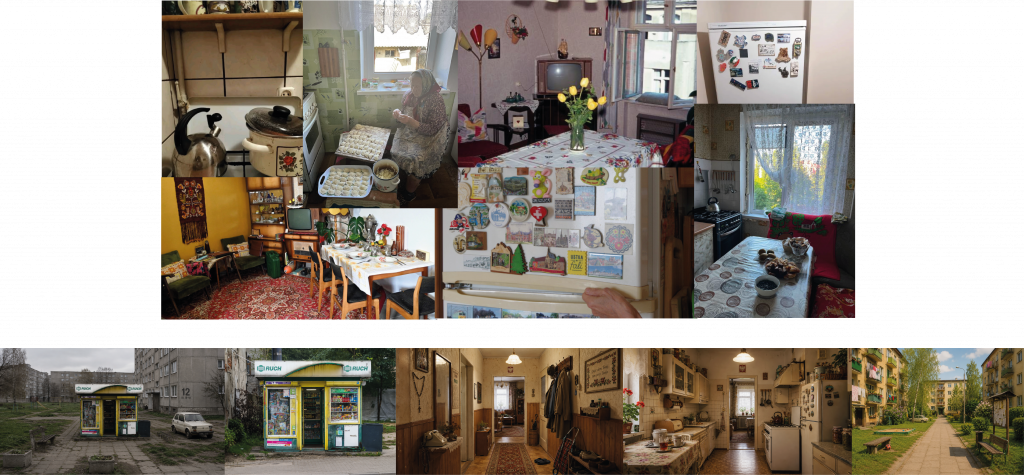
As most houses belonging to grandparents who lived during the times of the Polish People’s Republic look very similar due to extremely limited options for house decor during that era, I began my creative process by researching what a typical “Polish grandma’s home” consists of. I connected the images from my grandma’s house with information from the internet.
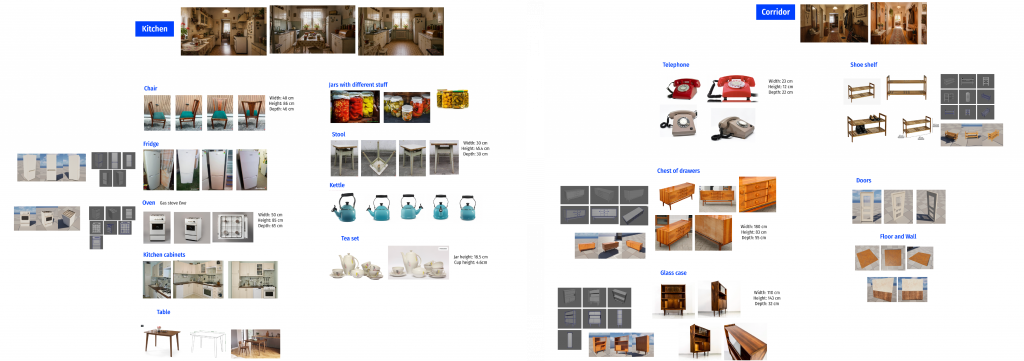
I found websites of institutions like the Museum of Life Under Communism in Warsaw, Wirtualne Muzeum Gazownictwa (eng. Virtual Gas Museum), or furniture shops like MIDMOD and Lata 60-te (eng. the 60s) especially helpful, as I knew that these sources were fully accurate. They provided me with detailed images and descriptions of certain elements, including their dimensions.

I gathered as many visual representations of what I needed to end up with the desired product on a Figma board. This helped me visualise everything together and keep my references organized.
MOODBOARD
STORYBOARD
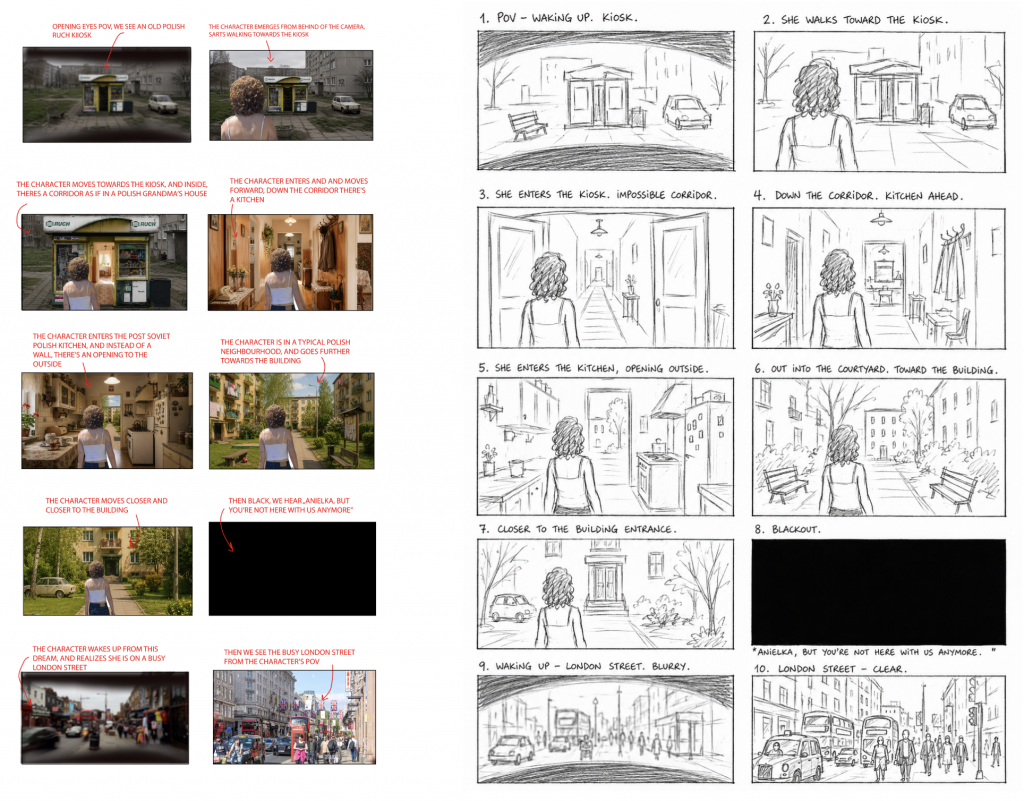
Having a clear idea of the animation sequence and an overall look of the project, I could create a storyboard. First, I worked on simple collages in Photoshop that served as a blueprint for the storyboard I generated using ChatGPT.
The storyline goes as follows: I wake up in a very typical Polish neighbourhood, where I see a Ruch kiosk right in front of me. I walk toward it, encouraged by the calls of my grandmother. When I enter through the door, I don’t see a typical interior of a corner shop. I realise that I am inside my grandmother’s house, full of nostalgic furniture, decor pieces, and familiar sounds in the background. I walk through the corridor and enter the kitchen, looking around, and when I leave, I again find myself in a neighbourhood full of Polish buildings. There, I hear my grandma’s voice again, saying “Anielka, but you are not here with us anymore”. I realize it’s all been a dream, and I suddenly black out and wake up in London, which is my reality now.
These storyboards were my anchor points and guidelines, necessary to start creating.
REFERENCE BOARD
As my goal was to create an environment that would be as realistic as possible, I needed to gather as many reference photos of the objects and furniture which I planned to model in Maya. I used sources like the websites presented above, as well as some other second-hand shops, which provided me with photos of different angles, as well as technical information, such as exact dimensions.
3D ASSETS DEVELOPMENT
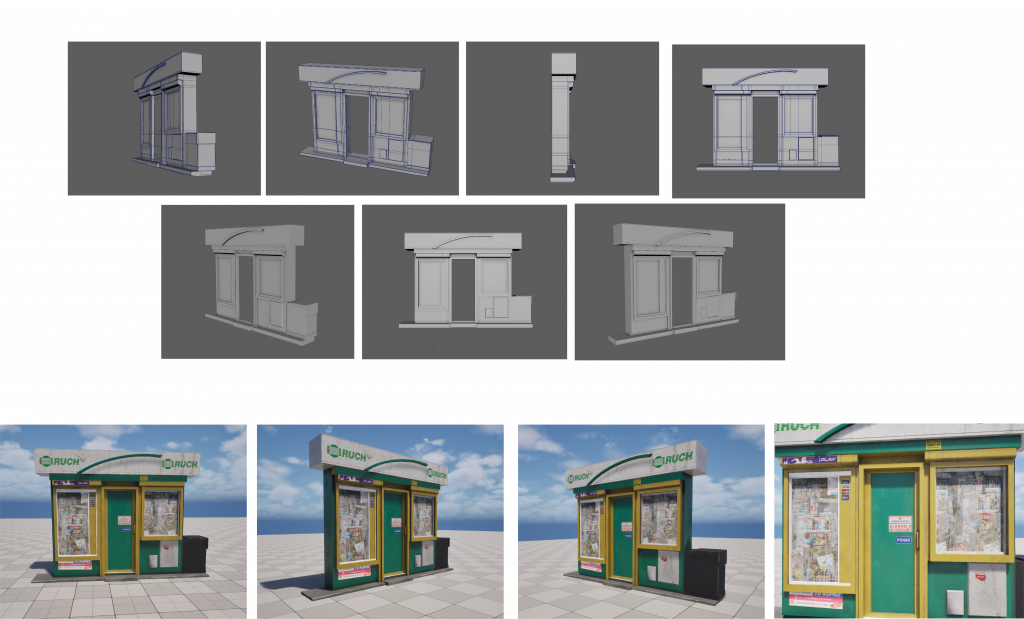
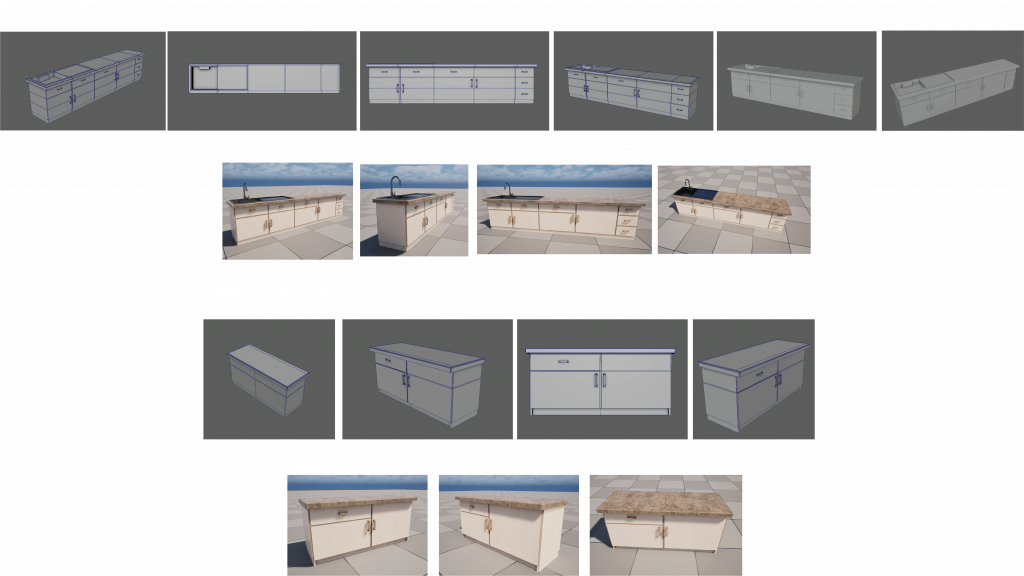
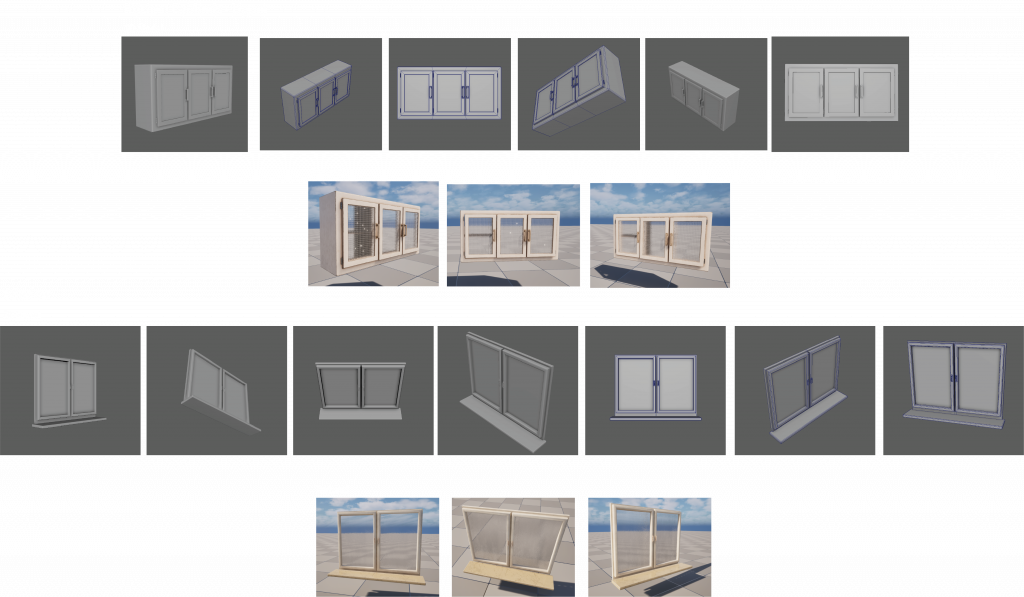
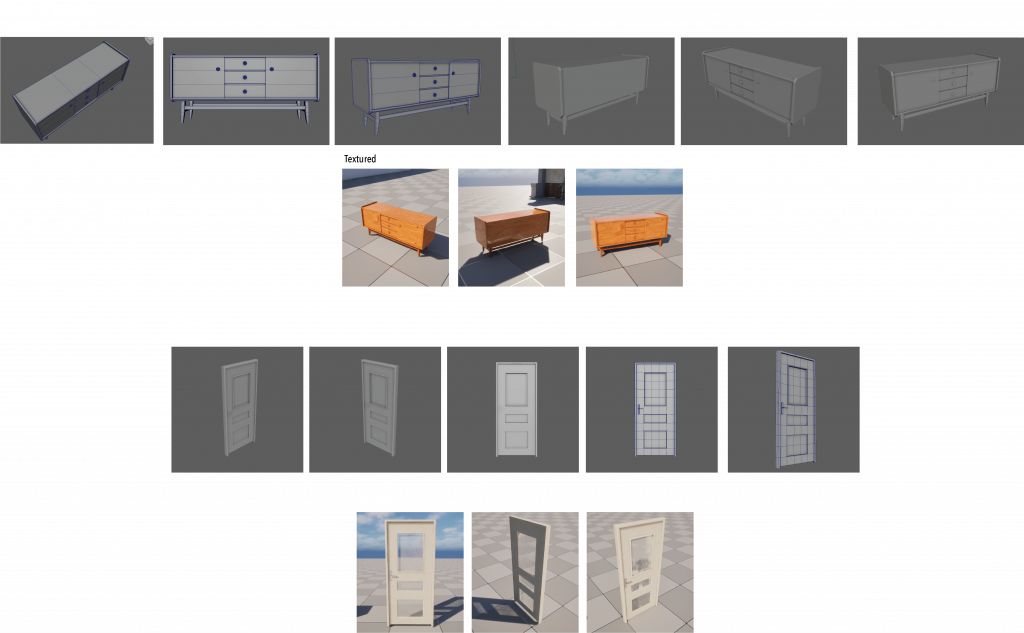
Next step was to start modeling as many assets as I possibly could. I wanted to practice using Maya and texturing in Substance Painter, as my goal is to eventually work as an Environment Artist. I challenged myself to learn modeling, UV unwrapping correctly and optimizing my 3D models by making sure that their typologies are clear and neat.
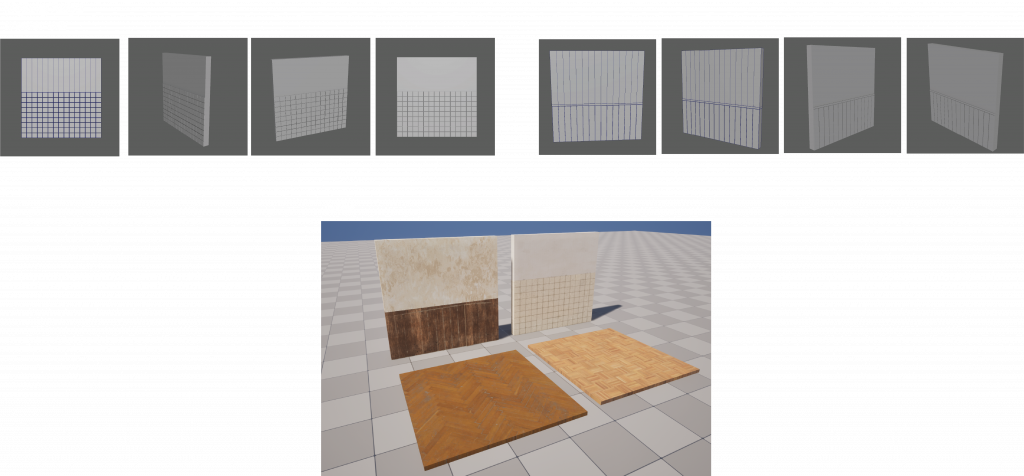
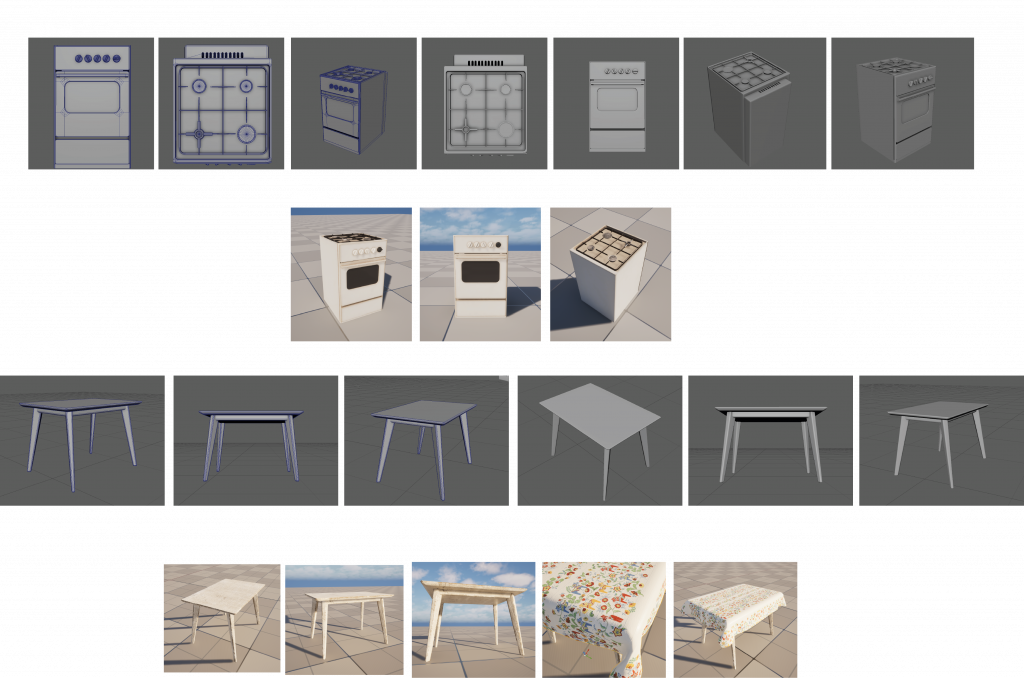
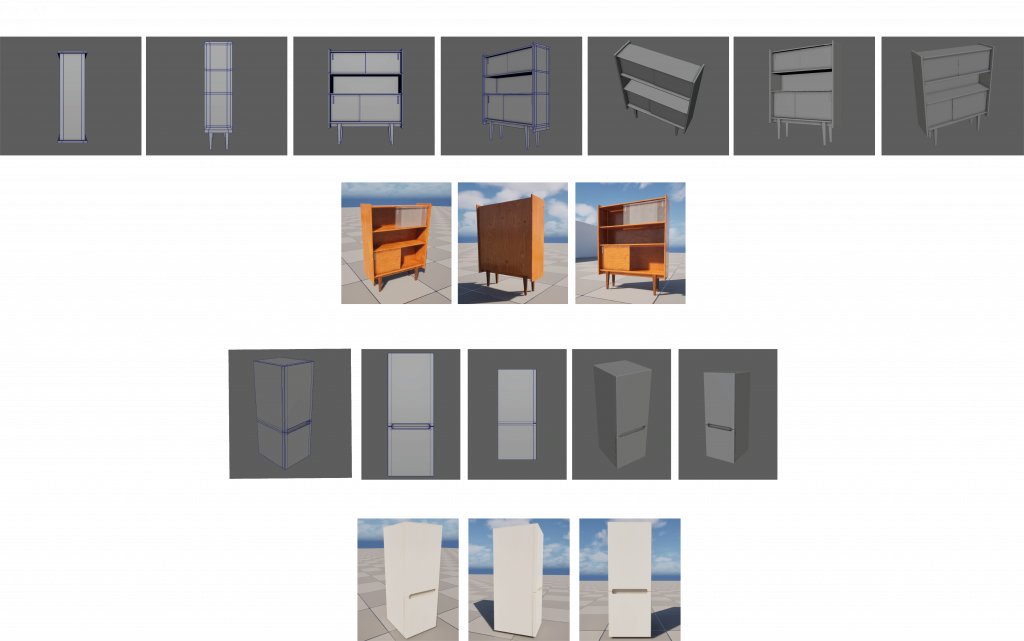
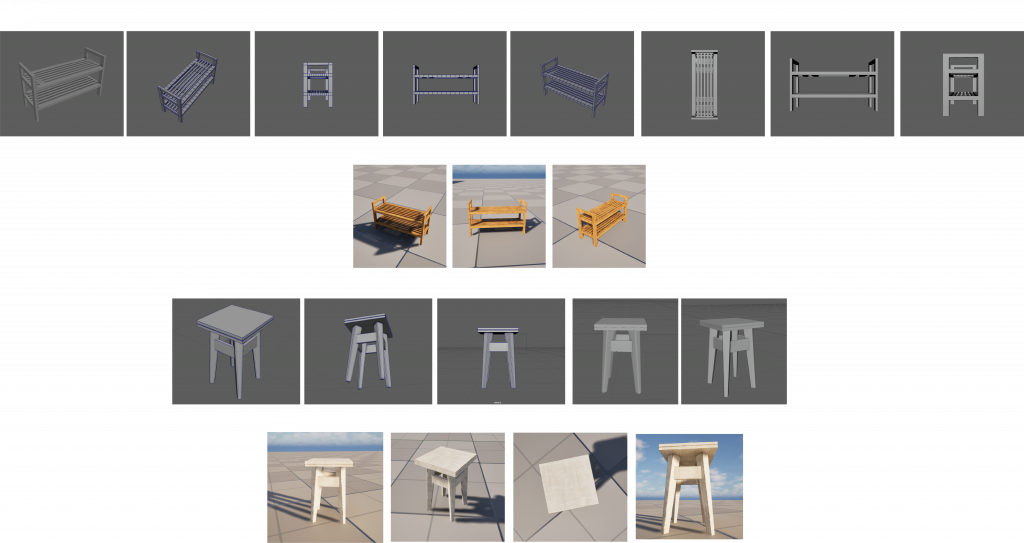
I first worked on developing the biggest pieces, such as the Ruch kiosk or modular kits for the walls and floors. Then, I moved to the most prominent furniture, such as the fridge, oven, or the table, and then modelled some smaller decor elements, like the photo frames or seats.
Below are all the 3D assets that I modeled fully from scratch in Maya, and textuered in Substance Painter.
ENVIRONMENT DESIGN DEVELOPMENT
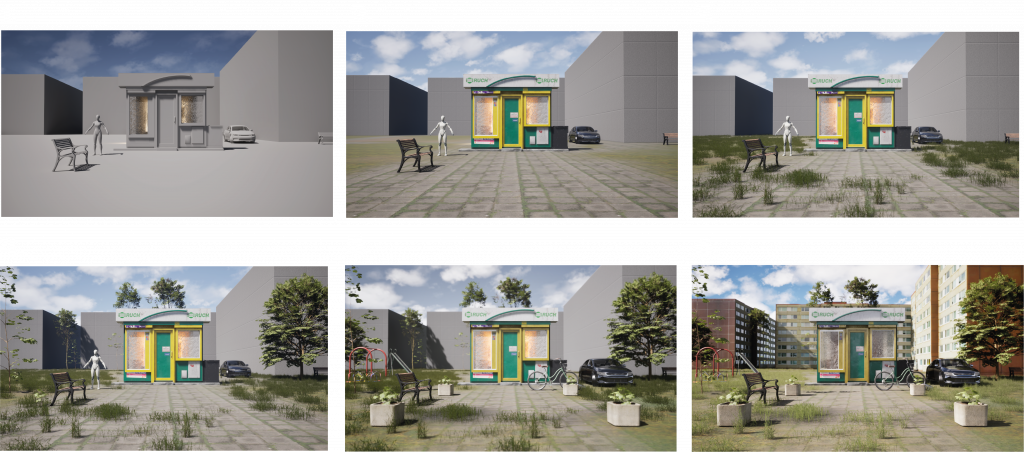
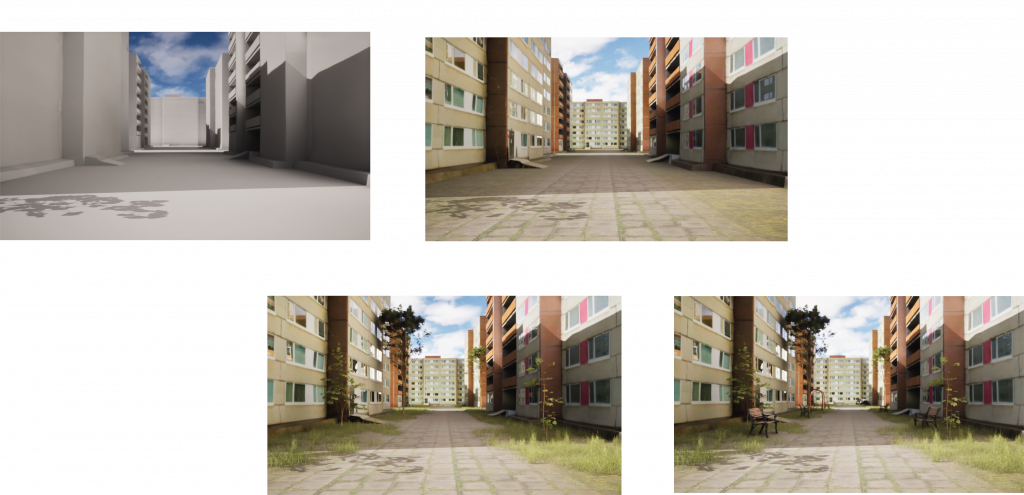
Having most of the assets either modeled in Maya or accessed from Fab / BlenderKit, I could move straight to developing my block out into a finalized, detailed environment. I began with roughly placing the biggest 3D models where they should be to see if the composition looks good through the camera lens.
FRONT ENVIRONMENT
- Block out
- Applying materials
- Working on the smaller foliage
- Applying trees
- Adding smaller elements
- Applying texture to the background elements
BACK ENVIRONMENT
- Block out
- Applying materials
- Working on the foliage
- Assembling smaller 3D assets
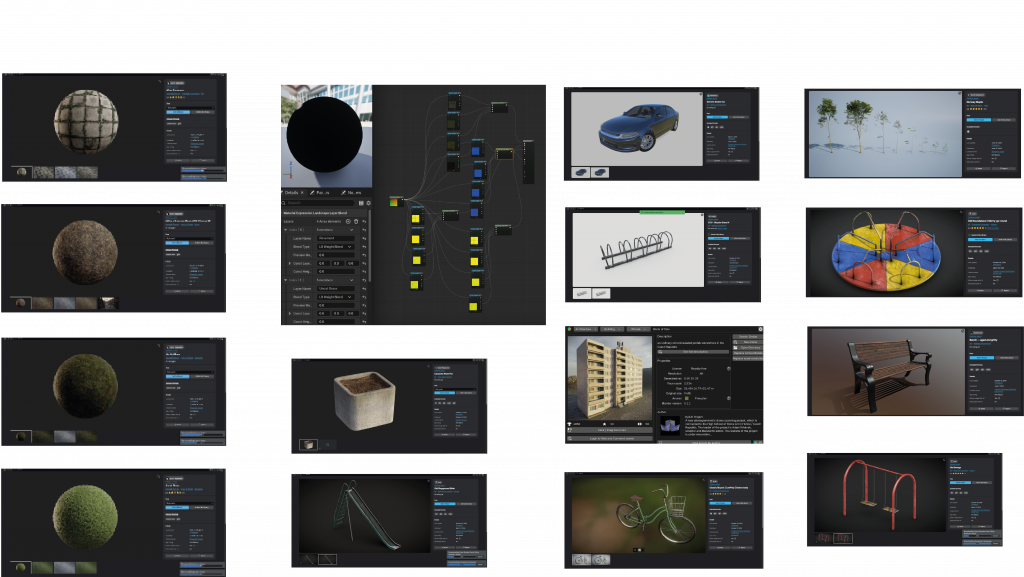
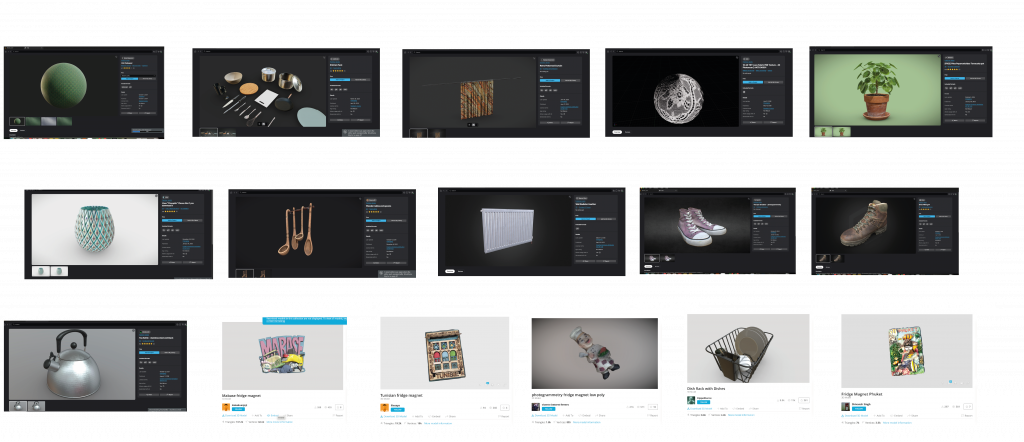
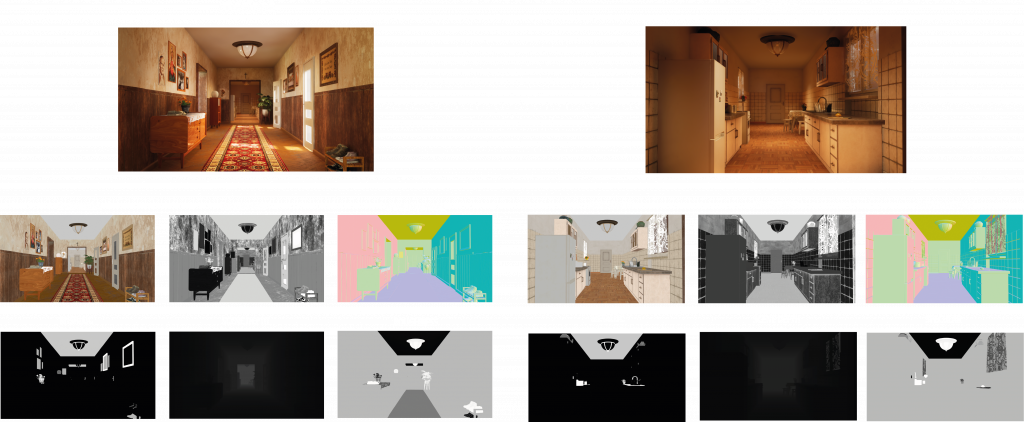
RENDER PASSES
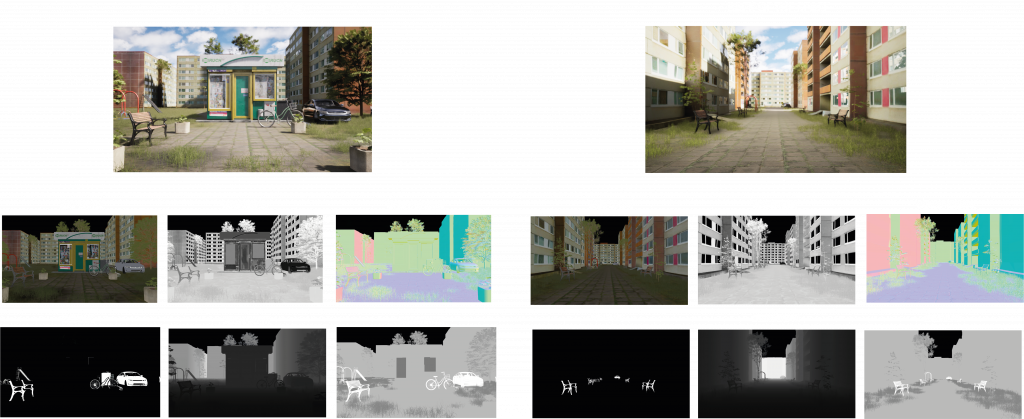
VIDEO EDIT AND SOUND DESIGN
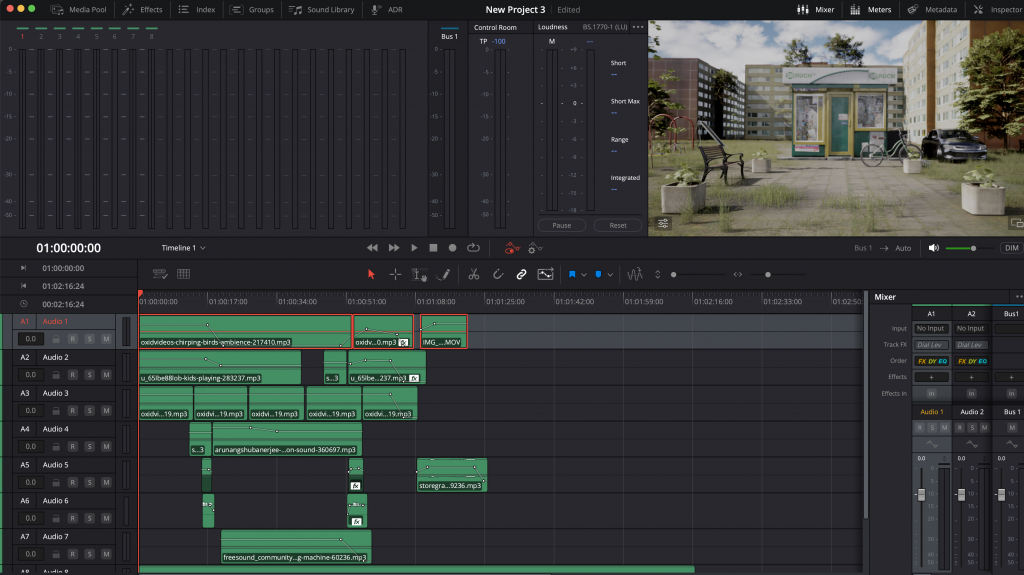
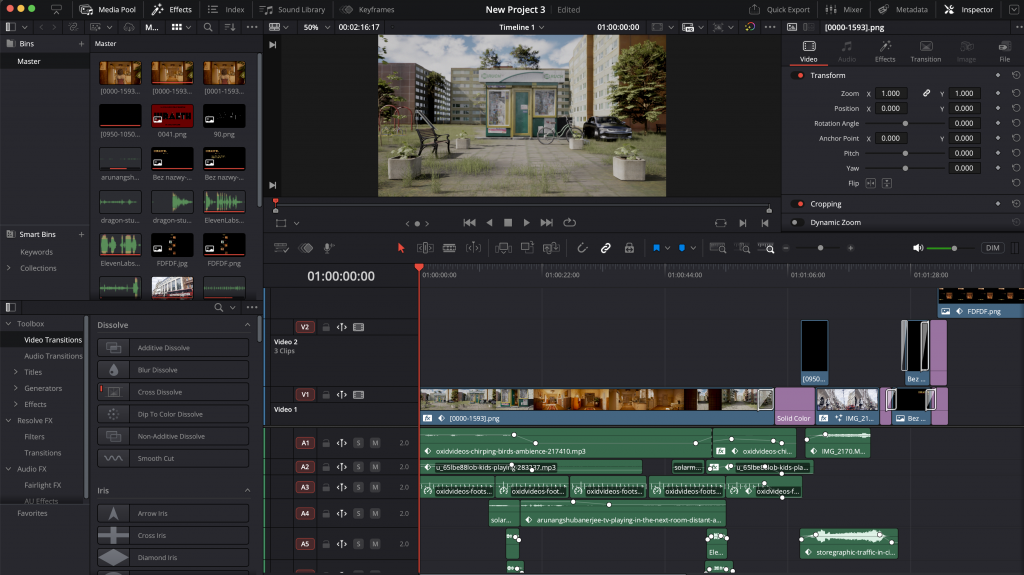
The software that I used for final video editing and sound design was DaVinci. There, I put all my renders, footage, and other elements together. As for the sound design, I used the Pixabay library as my main source, where I was able to find everything I needed to finalize my animation.
HIRAETH – FINAL VIDEO
HIRAETH – JUST CGI
VFX BREAKDOWN