PROJECT DESCRIPTION
This project was developed as part of an MA Visual Effects brief requiring the creation of a short film addressing a relevant social or environmental issue through the integration of live-action footage and CGI. Working within a one-minute format, the project challenged us to communicate a meaningful message through visually compelling storytelling while demonstrating technical and creative problem-solving across the VFX pipeline.
As a team of three, we approached the project collaboratively by dividing responsibilities into focused production areas. This included research and concept development, pre-production planning, live-action cinematography, CGI asset and environment creation, compositing, editing, and visual development. Due to the short runtime and ambitious visual scope, efficient teamwork and pipeline organisation became essential to ensure consistency between practical footage and digital elements.
The project required a seamless integration of computer-generated imagery with filmed performances, encouraging us to experiment with visual metaphors, environmental transformations, and cinematic transitions to strengthen the emotional and conceptual impact of the narrative. By combining grounded live-action with digitally created environments and effects, we explored how VFX can function not only as a technical enhancement but also as a storytelling tool capable of visualising abstract experiences and social themes.
Through this process, the project allowed us to develop both our technical skills in CGI and compositing and our understanding of how visual effects can be used to communicate socially meaningful ideas in a concise and emotionally engaging form.
PITCH DECK
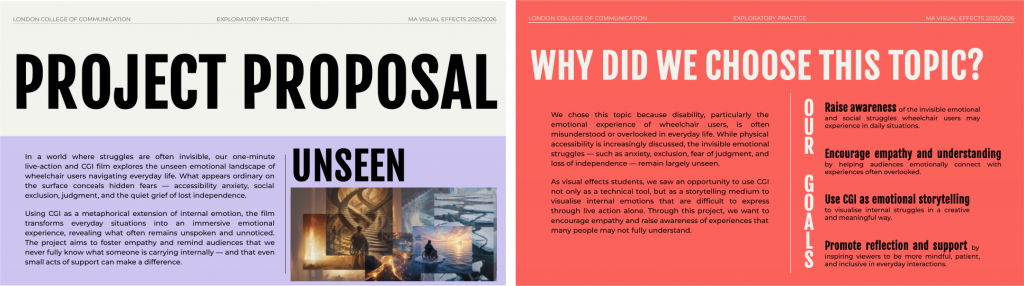
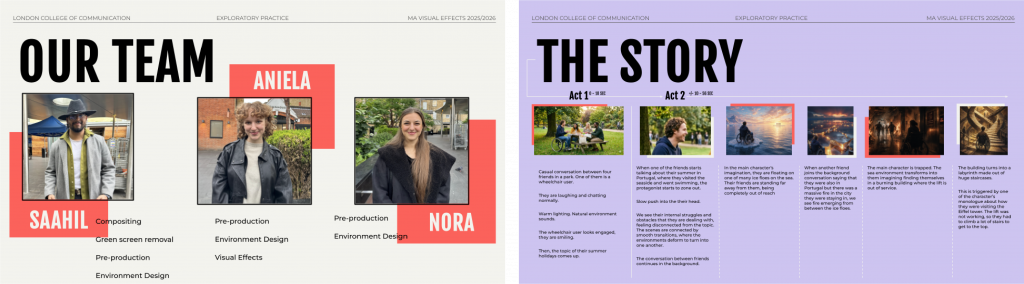
To clearly present and sell our idea, as one of the first stages of production, we were asked to create a pitch deck, which we presented during one of the first group project tutorials.
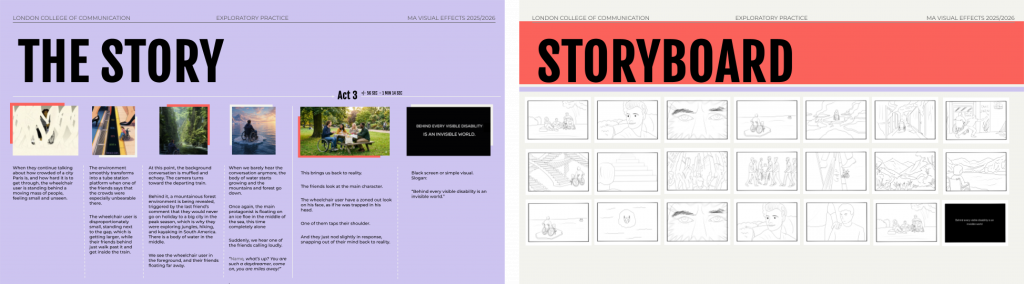
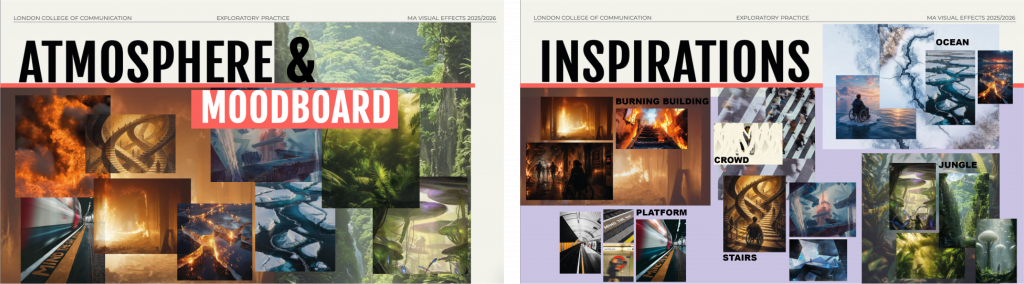
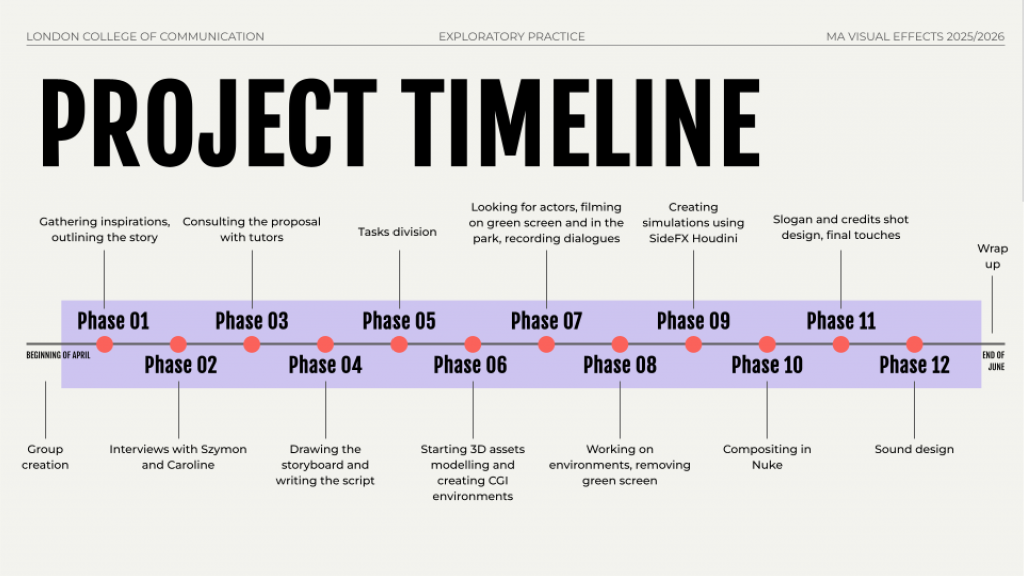
In our pitch deck, we described the idea behind our project, its meaning and intent, as well as presented the initial storyboard that we came up with. We also added a moodboard and reference board, and finally showed a potential production timeline.
STORYLINE
This project explores the unseen emotional landscape of wheelchair users navigating everyday life. It shows that what appears ordinary on the surface often conceals hidden fears, such as accessibility anxiety, social exclusion, judgement and the grief of lost independence. We decided to showcase this using a conversation between friends about their summer holidays plans as an example.
Four friends, one of them being a wheelchair user, are having a casual talk, when suddenly the topic switches to what each of them is planning to do over the summer. While the conversation unravels, the film transitions into CGI environments, which are the metaphorical extensions of the protagonist’s internal emotions. They reveal barriers and fears that the girl struggles with, such as environmental hazards, inaccessible and crowded spaces, or using public transport on her own. She becomes disconnected from her friends and sinks into her own imagination, which symbolises her invisible struggles.
Our goal was to foster empathy and remind audiences that we never fully know what someone is carrying internally, and that even small acts of support can make a huge difference. As visual effects students, we saw an opportunity to use CGI not only as a technical tool, but as a storytelling medium to visualise emotions that are difficult to express through live action alone.
INTERVIEWS
Because none of us has lived through the experience that we wanted to present in our project, we decided to conduct interviews with actual wheelchair users as part of our research & development phase. They could objectively judge the storyline, talk to us about what they struggle with daily, and generally inform our production process.
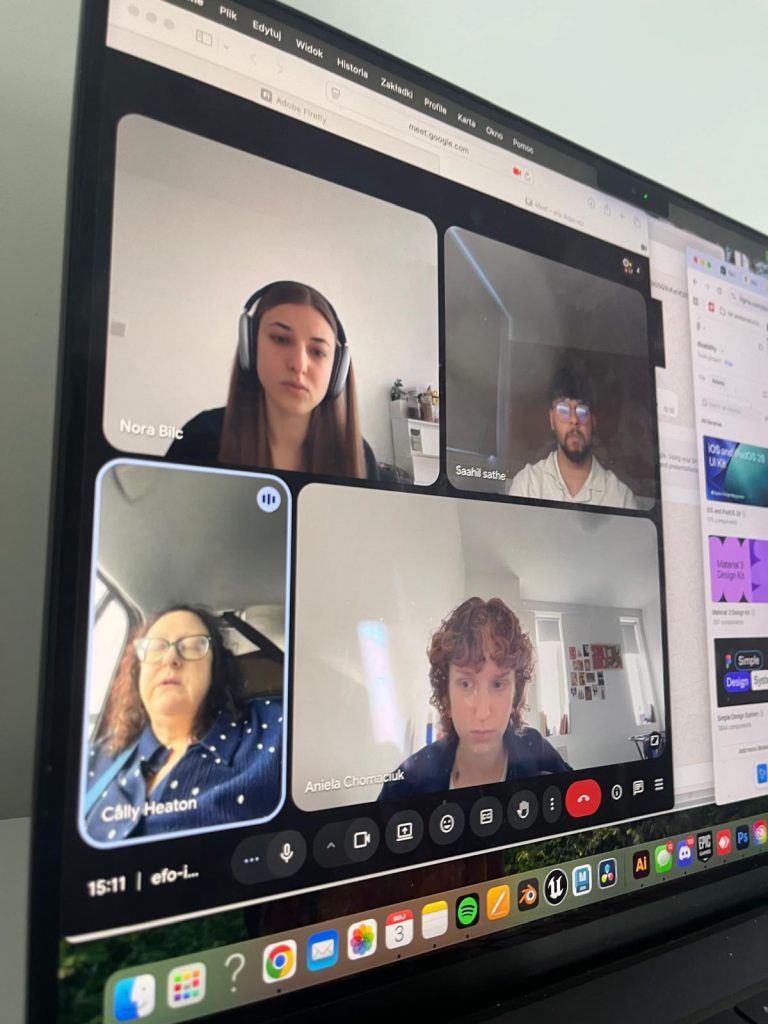
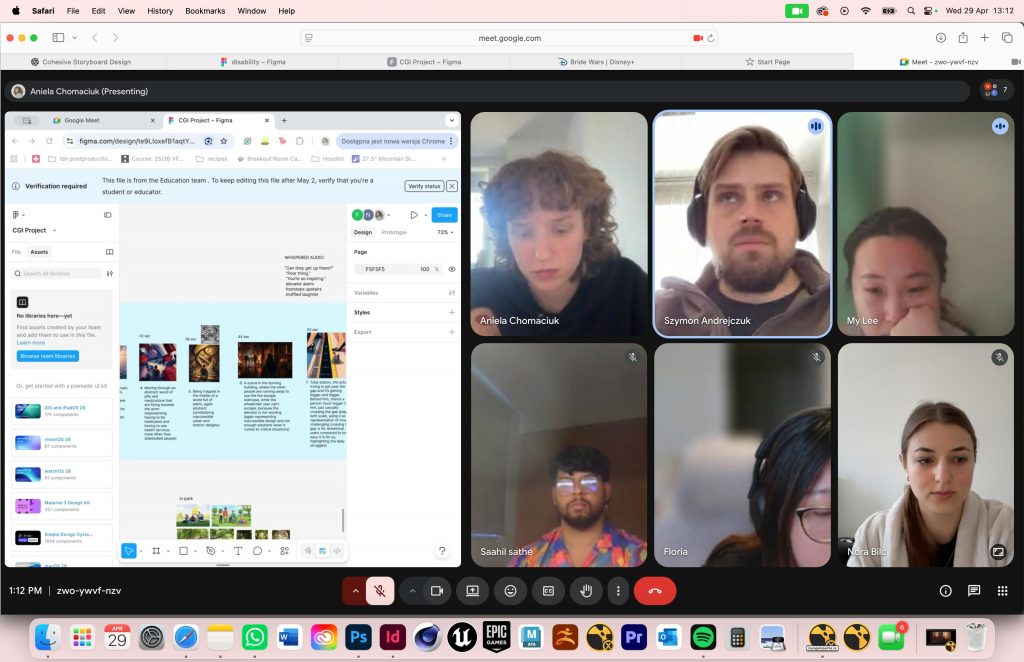
We came up with a list of questions that were asked to both my friend, Szymon, and Caroline, a friend of our tutor David. They kindly agreed to speak to us about their experiences and gave us constructive feedback on our idea. We also spoke about the message that we wanted to convey to my mum, who is a special educational needs teacher and has a long history of working with kids with various disabilities.
SCRIPT
The conducted research and visual inspirations gathered allowed us to come up with a script and decide how many actors/actresses are needed for the film. Below is the script that I wrote, and that was later on used during the shoot.
CASTING AND SEARCHING FOR ACTORS
As our project is exploring the unseen emotional experiences of wheelchair users, such as exclusion or isolation, we decided to try our best to find an actor who would be an actual wheelchair user. Hence, the representation would be more reliable, and we could consult someone who is living through those experiences about our ideas and approach.
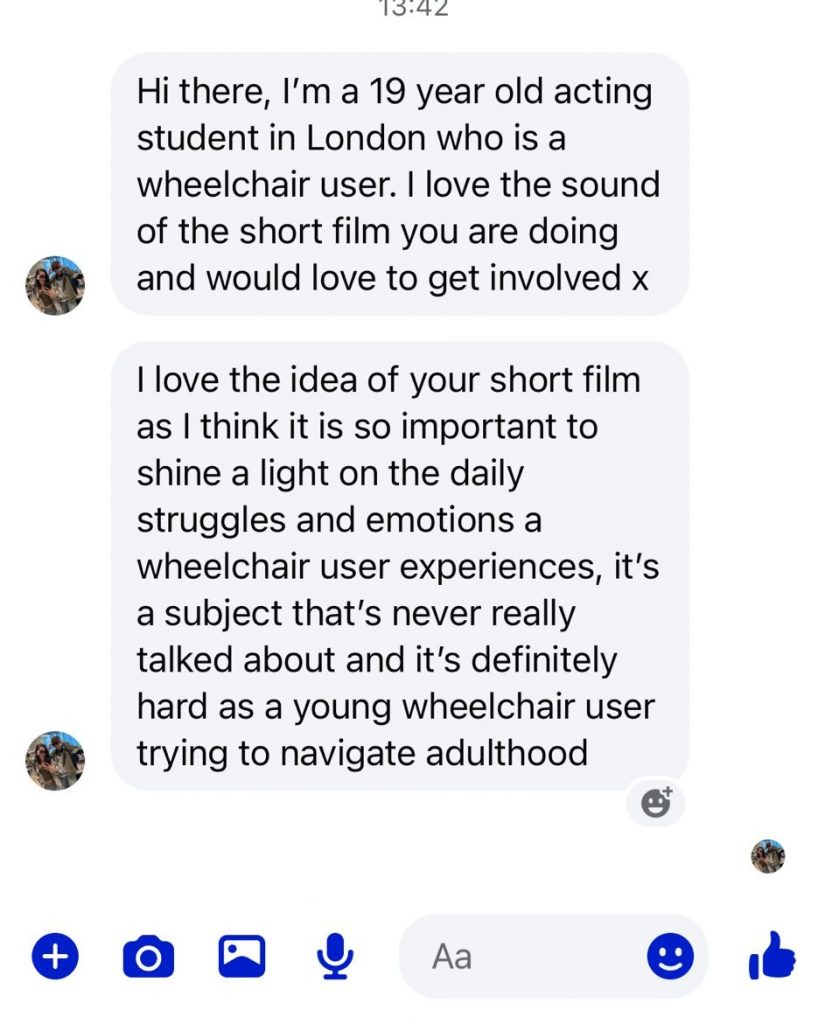
We collectively decided to share Facebook posts on multiple Facebook groups that gather amateur actors and acting students from all over London, such as Actors Actors Actors! Wanted!, London Actors & Filmmakers Community, or London Actors Network. Altogether, I posted more than 20 casting calls all over this website.
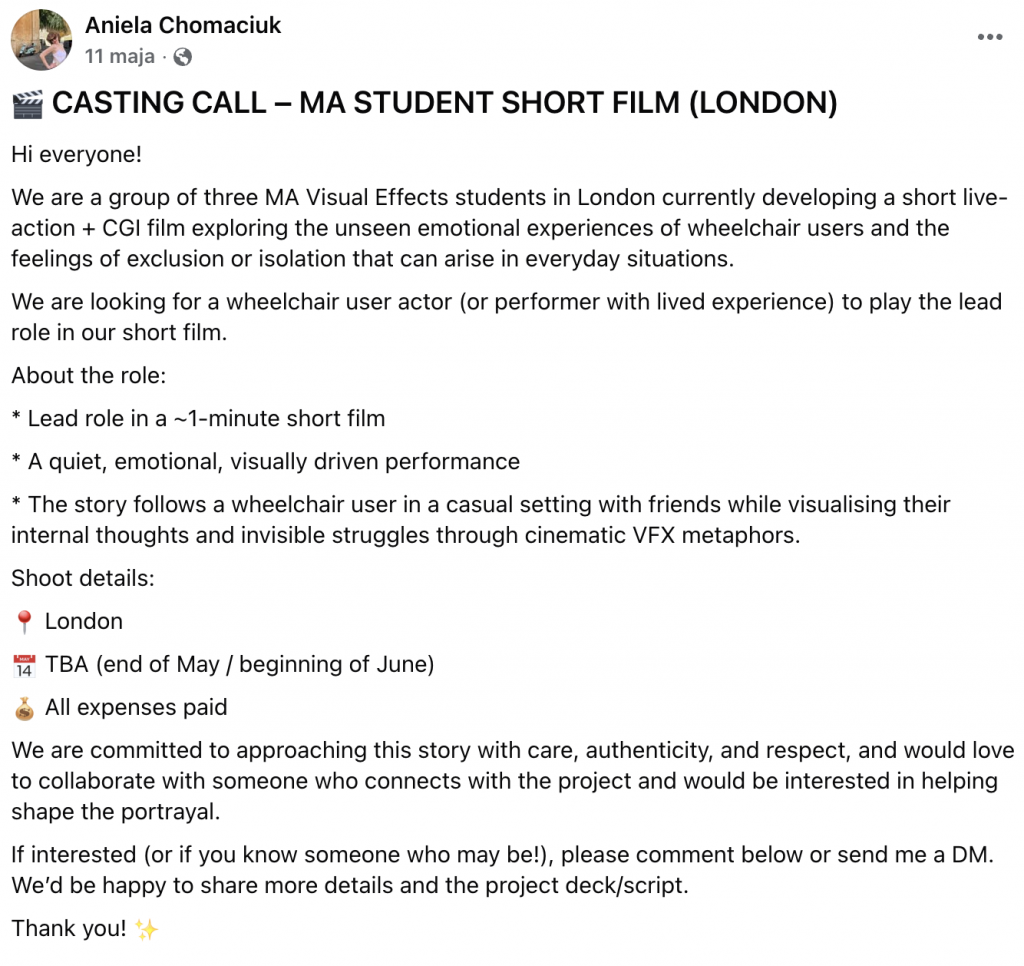
Thankfully, it did not take us long to find the perfect actress for our film. A few days later, I received a message from Talia, a 19-year-old acting student, who has been a wheelchair user since early childhood.
She was very impressed with the storyline that my group came up with, and offered to ask three of her friends from the acting school to help us with production. Therefore, we ended up with four talented actresses, Talia, Grazzja, Emma and Eleanor, who acted in the film.
LOCATION SCOUTING
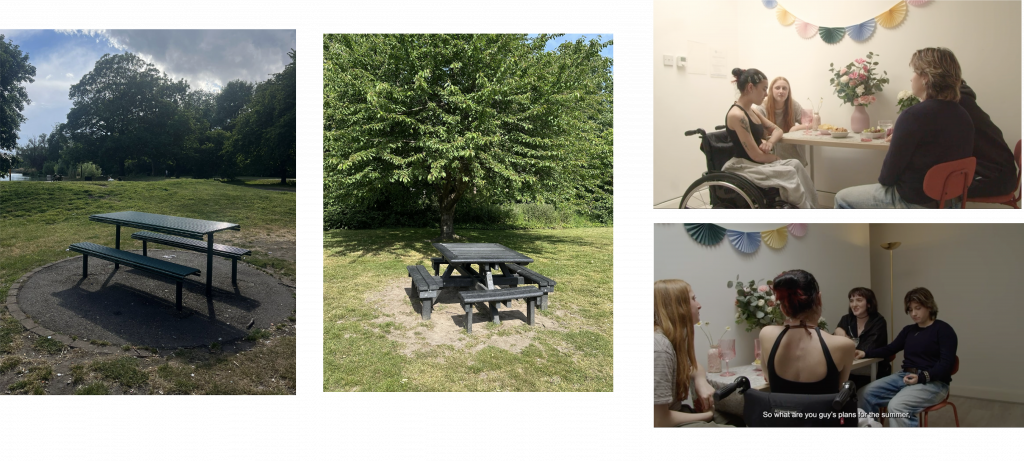
The initial idea was to film the first and last scenes, the ones showing four friends having a conversation, outdoors in a park. The first location candidate was Burgees Park, however, we were unsure about the regulations with regard to student filming there, so we decided to move forward with the gardens of Middlesex University. On the shooting day, however, the weather conditions were not cooperating and, once we reached the location with the actresses, we were surprised by pouring rain. Thankfully, Nora lives just a few minutes away from Middlesex University, so we decided to move everything to her flat. Unexpectedly, the shooting turned out to be even better than we predicted – the interior environment allowed for better-quality audio and a more relaxed atmosphere.
LIVE ACTION SHOOTING
Having found the actresses, a perfect location and finishing the script allowed us to smoothly move forward with the live action shooting. Although we initially planned to do it outdoors, due to the unexpected rainfall we were forced to move indoors, where we ended up shooting the live action scenes and recording the dialogues. Even though this change was unplanned, we were all happy with the result.
We covered the girl’s trip and provided food as well as drinks. The process went very smoothly, as the actresses had already prasticed reading the script before and were allowed to change a few sentences to ensure a natural flow of the conversation.
GREEN SCREEN SHOOTING
A day after live-shooting the frist and last scenes in Nora’s flat, as well as recording the background dialogue, we invited Talia to London College of Communication, where we used the green screen studio to film the rest of the footage that would be placed within the CGI environments. After multiple takes and tests of various angles, we were happy with the results, and could wrap up the shooting process.
TASK DIVISION
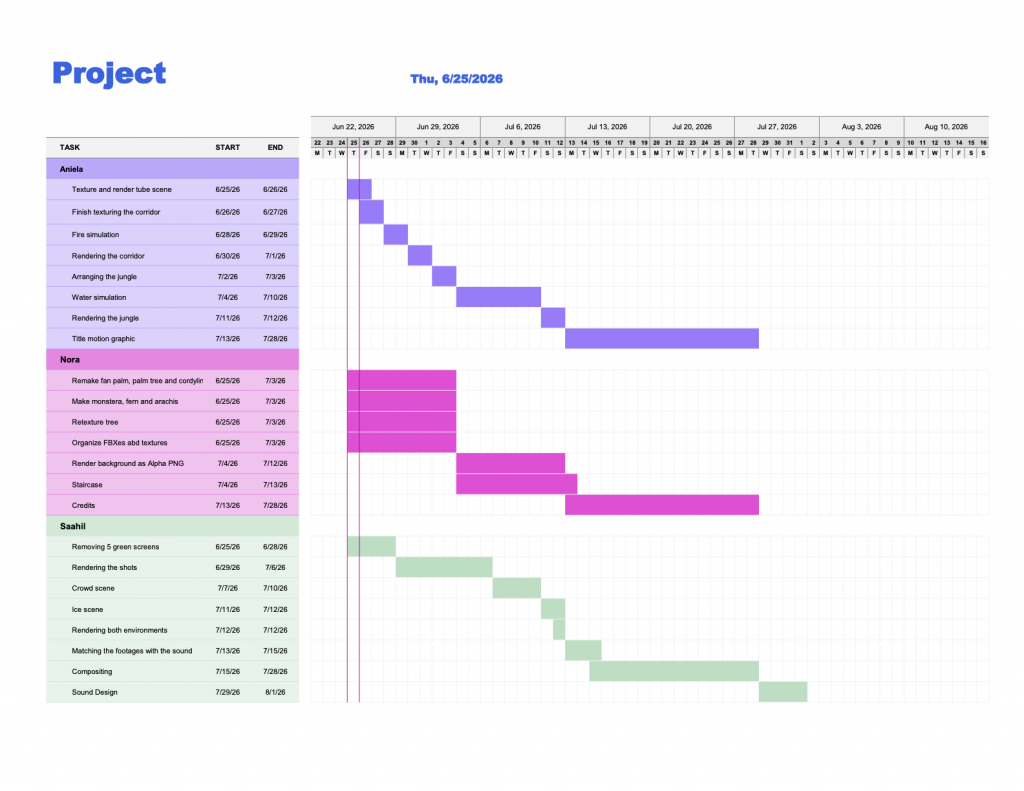
We all put a lot of collective effort into the pre-production phase, such as the concept development, and then divided the other tasks based on what each one of us feels most confident at and/or what we would like to potentially have in our portfolios. Six different environments representing the struggles of the protagonist needed to be developed. As my goal is to become an Environment Artist who also creates VFX elements in Houdini, I volunteered to work on the scene where the girl is trapped in a burning building and the tube scene, which required a lot of detailed texturing in Substance Painter.
BURNING BUILDING ENVIRONMENT DEVELOPMENT
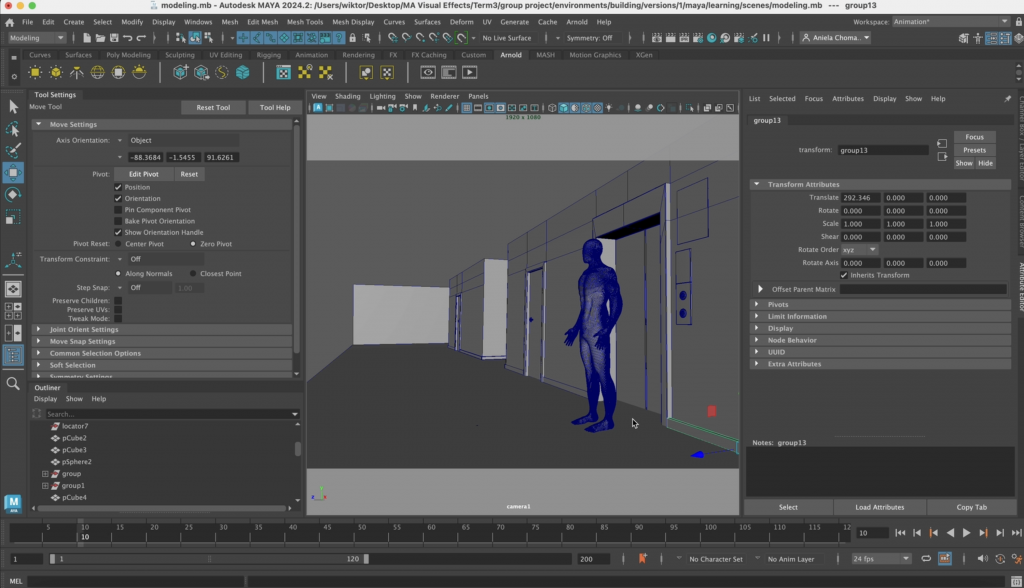
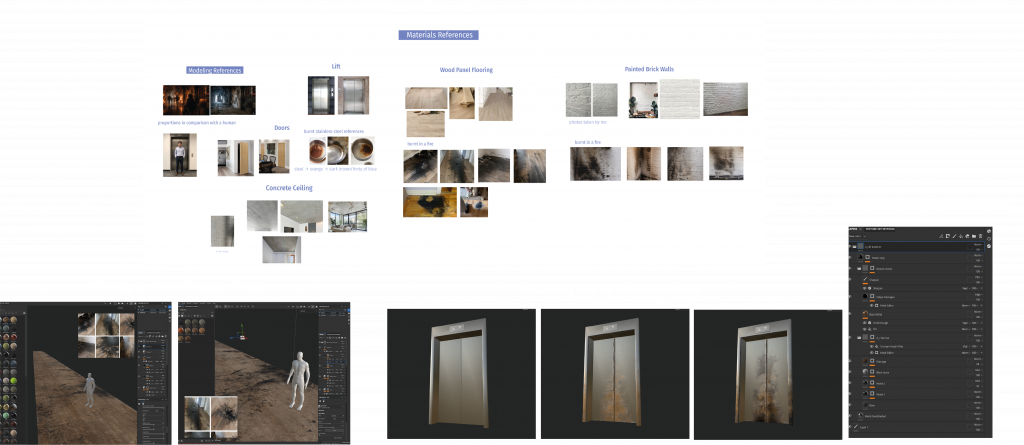
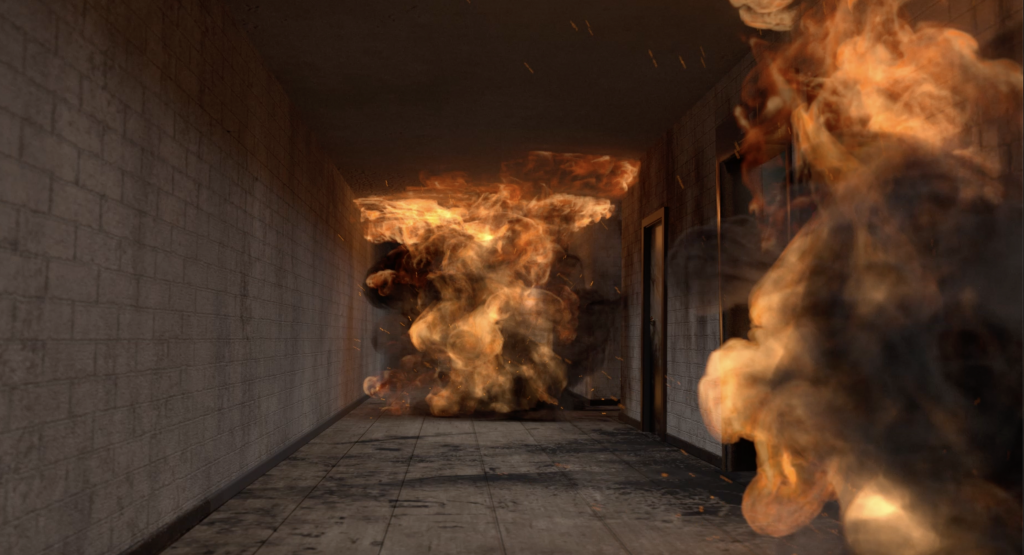
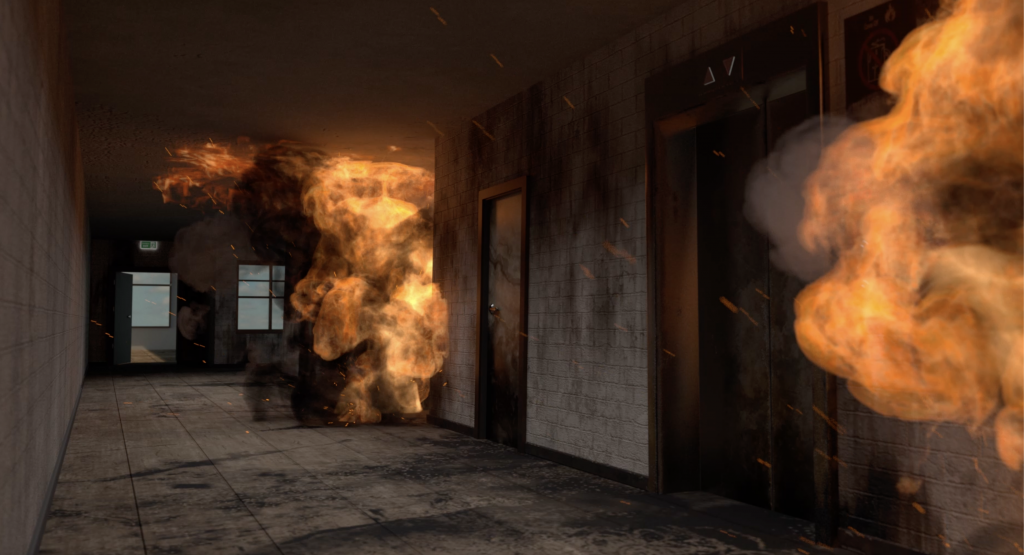
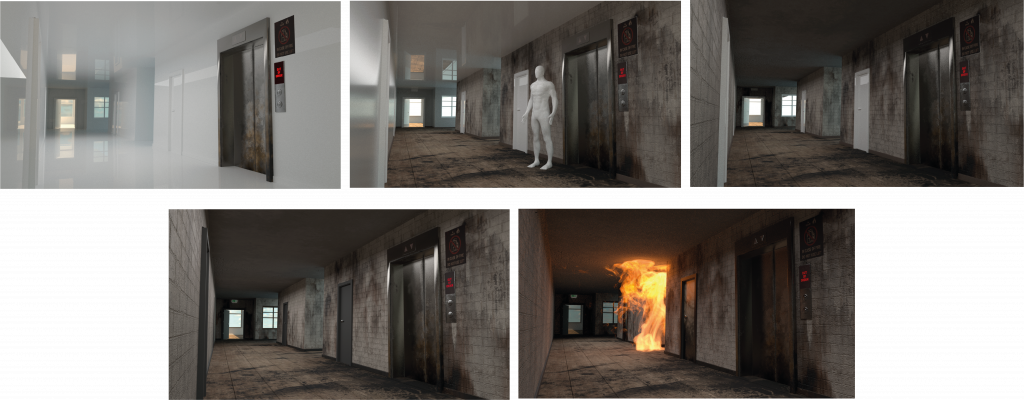
My focus here was to develop a corridor environment that I would fully model in Maya and texture in Substance Painter. The main element of the environment, however, was the fire spreading across the building, which I developed from scratch in SideFX Houdini. As I hadn’t used a lot of Substance Painter before this project, and I was still new to 3D modeling, the goal was to practice as much as I could and get acquainted with the tools offered by these software. Even though I am more familiar with Houdini and the usage of Pyro, I have never developed anything more than smoke; hence, working on this environment was an exciting challenge.
3D MODELING IN MAYA
The process began with 3D modeling the whole corridor and additional assets in Maya. At first, I found this challenging because I’ve always used Blender as my primary modeling software; however, I quickly got accustomed to the tools and interface of Maya and found the process very pleasant.
TEXTURING
Before starting the process of texturing, I made sure to find as many real-life reference photos as possible.
FIRE IN SideFX HOUDINI
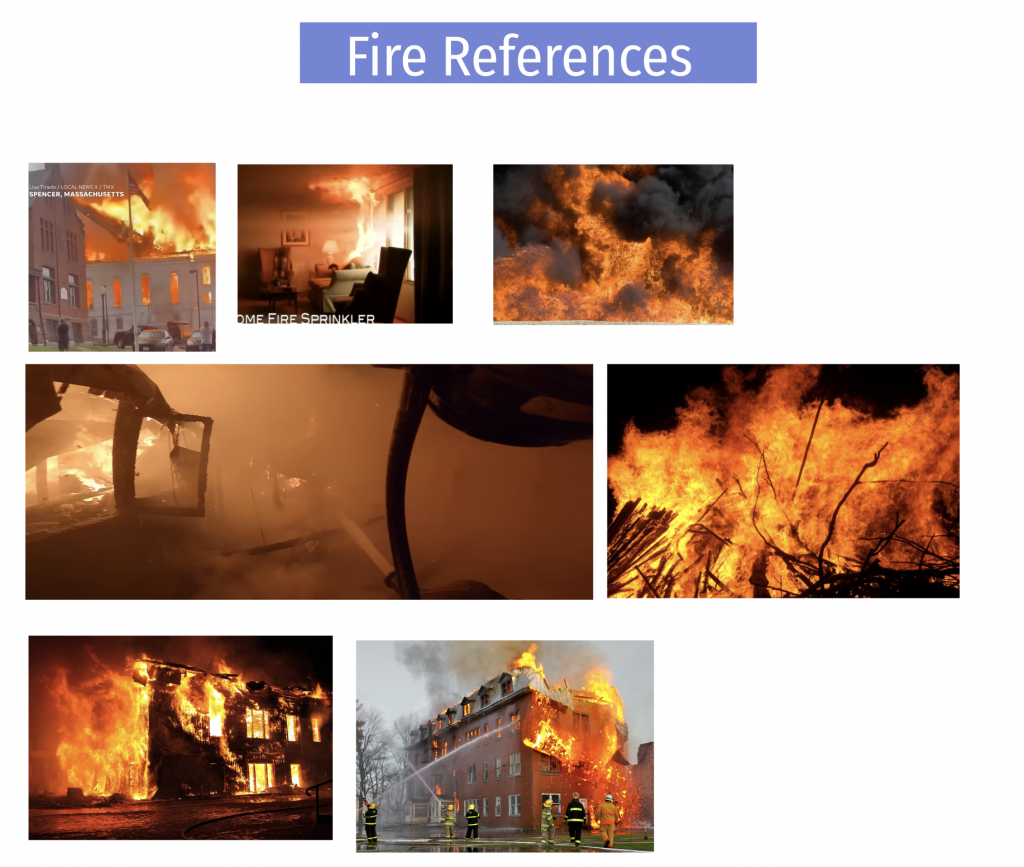
Here, I moved on to the part of the process that I was both most excited for and intimidated by. I again started by gathering many reference photos and watching videos filmed by firefighters to understand how fire behaves and moves in real life.
When I was ready, I moved on to working in SideFX Houdini, where, after watching tutorials and using the trial-and-error method, I developed a fire using PyroFX.
LOOK DEVELOPMENT
PARIS TUBE STATION ENVIRONMENT DEVELOPMENT
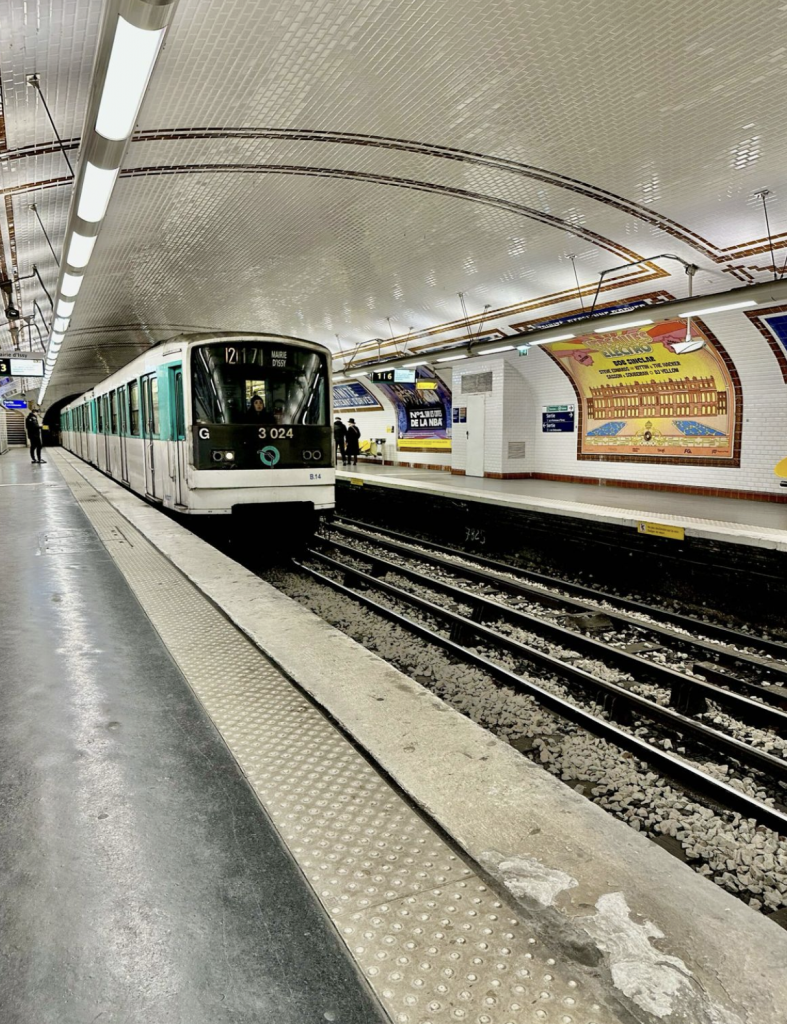
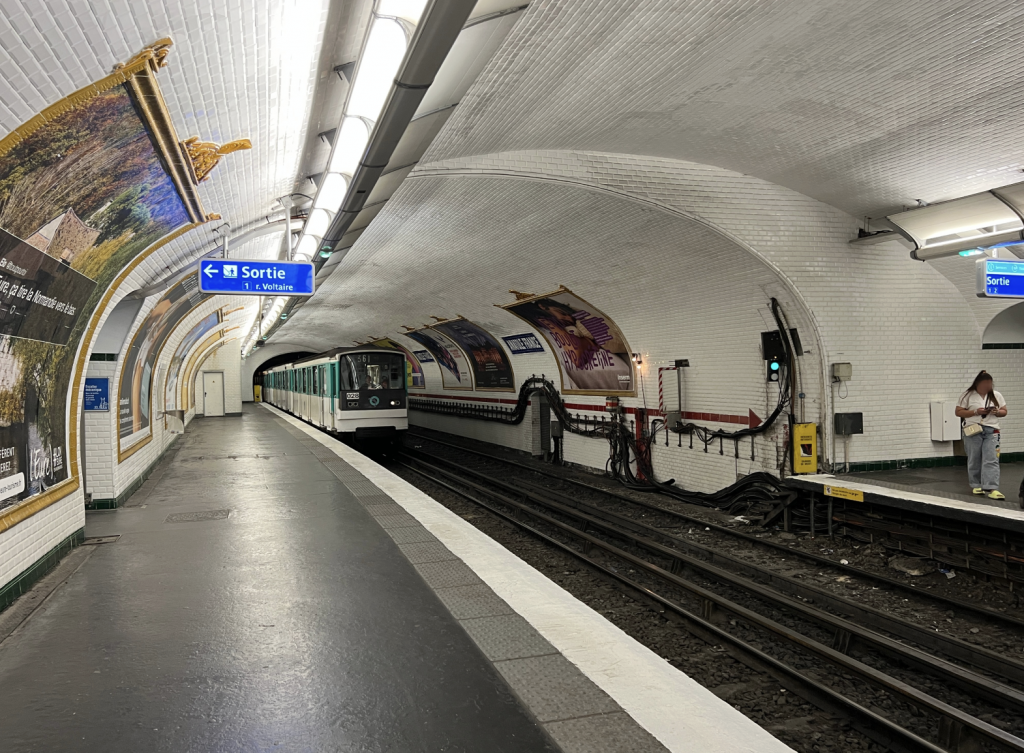
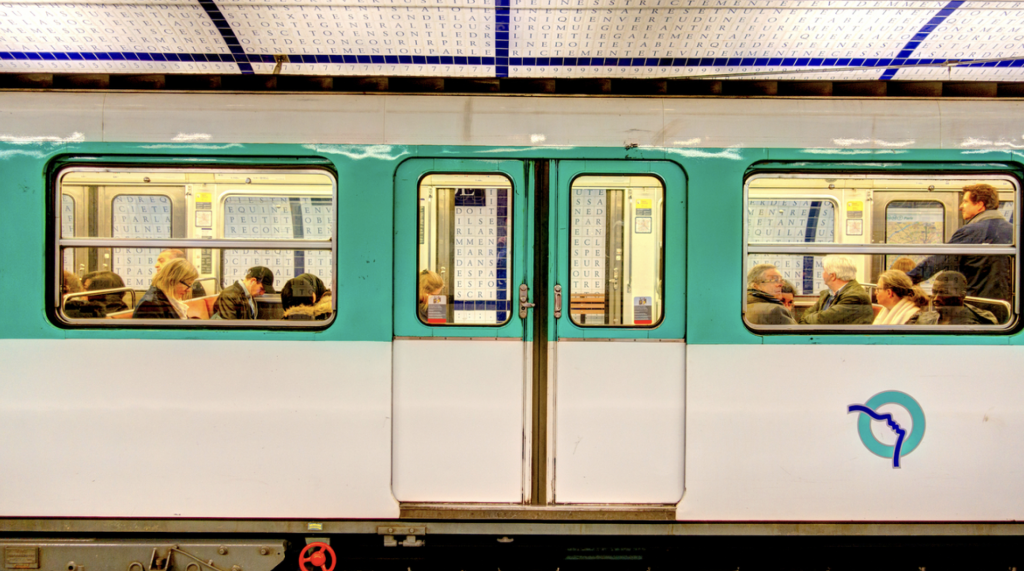
As the girls were talking about the Paris tube station here, the focus in this scene was to create an environment that would be realistic and true to how these stations look. Just as in the burning building environment, I started with gathering reference photos that guided my creative process.
PLATFORM – MAIN REFERENCES
TRAIN – MAIN REFERENCES
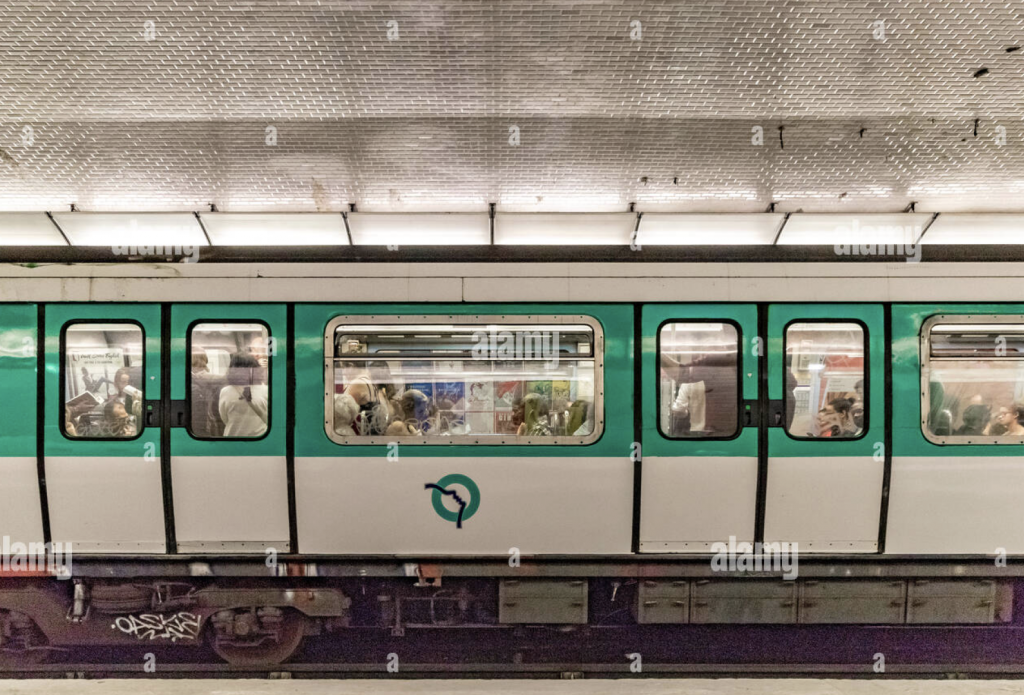
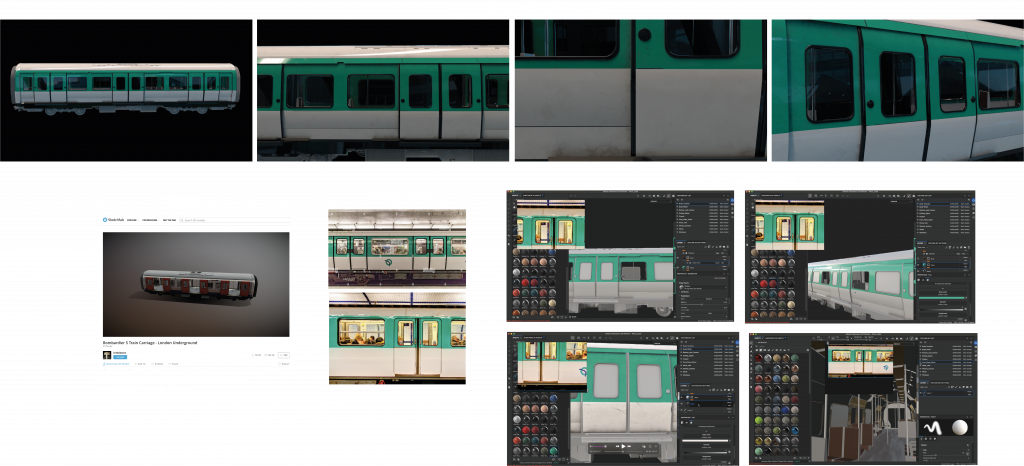
TRAIN TEXTURING
After gathering the needed references, I moved straight to texturing the train in Substance Painter. It took me multiple attempts, and I had to spend some time learning about the tools offered by the software, but this process was the moment when I realised that Texturing is exactly what I want to do in the future. I fell in love with the process, and ended up being satisfied with the result.
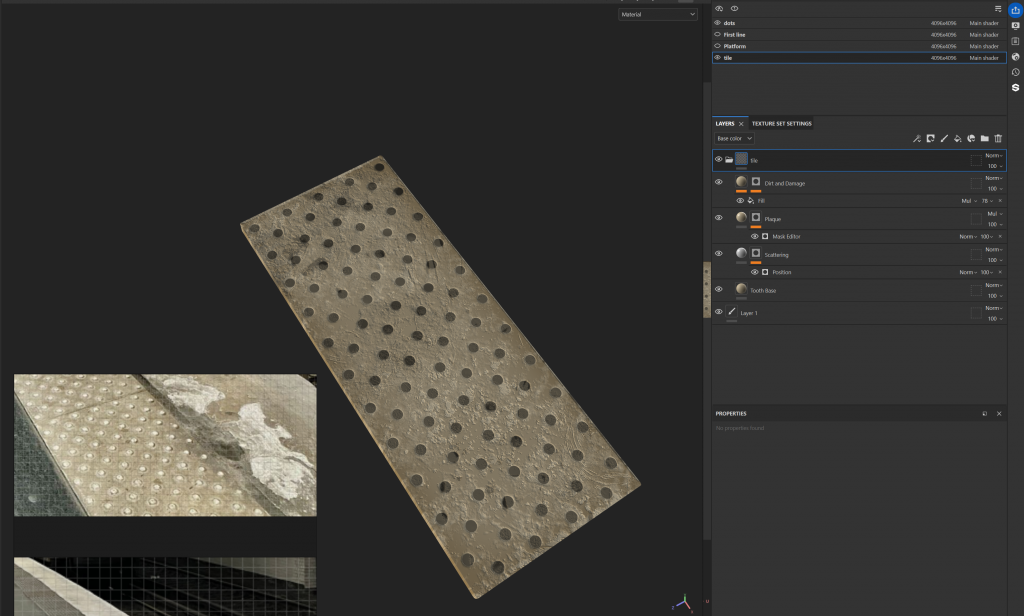
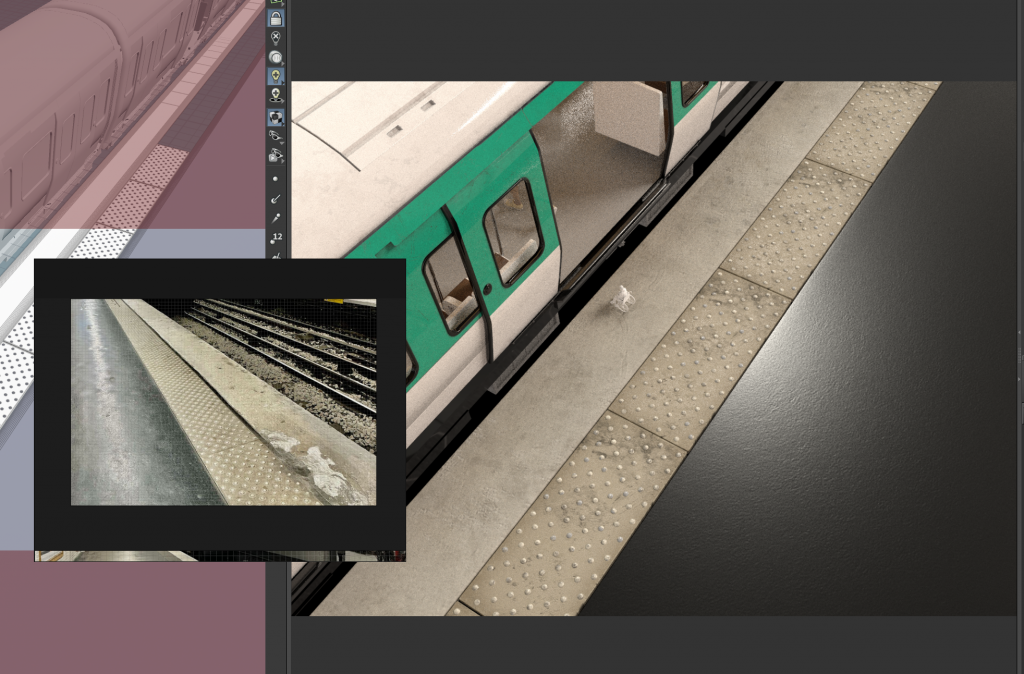
PLATFORM TEXTURING
When I had the train asset fully ready to be used, I moved on to modeling the station in Maya, and, later on, texturing it in Substance Painter. Again, I tried to get the environment to look as closely to the reference photos as possible.
THE OTHER ENVIRONMENTS
As we had six different environments to develop, we each decided to work on two. Nora created the jungle and staircase environment, and Saahil made the crowd and ocean scenes.
FINAL VIDEO
BREAKDOWN