PROJECT DESCRIPTION
Our first long Nuke task of the course was to create a Balloon Festival scene. This project focused on integrating 3D elements into live-action footage through a combination of compositing and 3D workflows, beginning with rotoscoping the mountain range in the provided plate in Nuke to create a clean separation between foreground and background elements. This step was essential for establishing depth and preparing the scene for the integration of computer-generated objects.
In parallel, a set of stylised flying balloons was modelled, animated, and rendered in Blender. The challenge was not only to create the 3D assets, but to ensure they matched the perspective, lighting, scale, and atmosphere of the original footage. The final stage involved compositing the rendered balloons into the shot in Nuke, where colour matching, depth cues, and overall scene cohesion were refined to make the CG elements feel naturally embedded in the environment.
Overall, this project functioned as a practical introduction to combining 3D and compositing workflows, while giving me hands-on experience with Nuke as a primary tool for shot integration and visual coherence.
PERSONAL GOALS FOR THIS PROJECT
Hard Skills
- Quality Rotoscoping in Nuke – making sure that the Roto that I create is clean and undetectable due to good shape hierarchy, edge control, atmospheric depth and motion blur
- Colour and Light Matching – matching CG elements to plate lighting and contrast, as well as adjusting colours to fit the footage
- 3D Assets Modelling and Preparation – practising modelling and animating in Blender, and rendering assets with consideration for compositing
- Node-Based Workflow – practising the correct way of structuring node trees for clarity; learning how different nodes interact and behave together
- Compositing Depth – learning how to add contrast loss, depth of field or assets to create a believable atmospheric perspective
Soft Skills
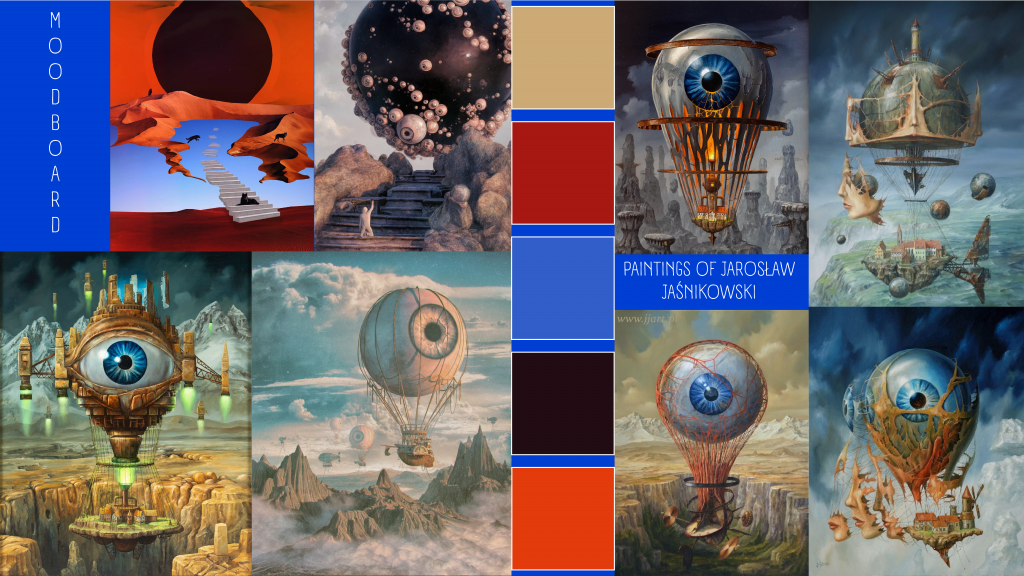
- Creative Thinking – creating a video supported by my initial ideas of the general feel of the final product; coming up with an idea for how I want my Balloon Festival to look and feel
- Problem Solving – trying different solutions for problems met on the way, considering various approaches to get the desired result
- Shot Management Discipline – making sure that my nodes are named clearly and that they are properly organised; saving iterations of my files
- Visual Sensitivity Training
- Adaptivity – being able to apply the requirements provided by the brief using a fairly new software
MOODBOARD
ROTOSCOPING THE MOUNTAINS
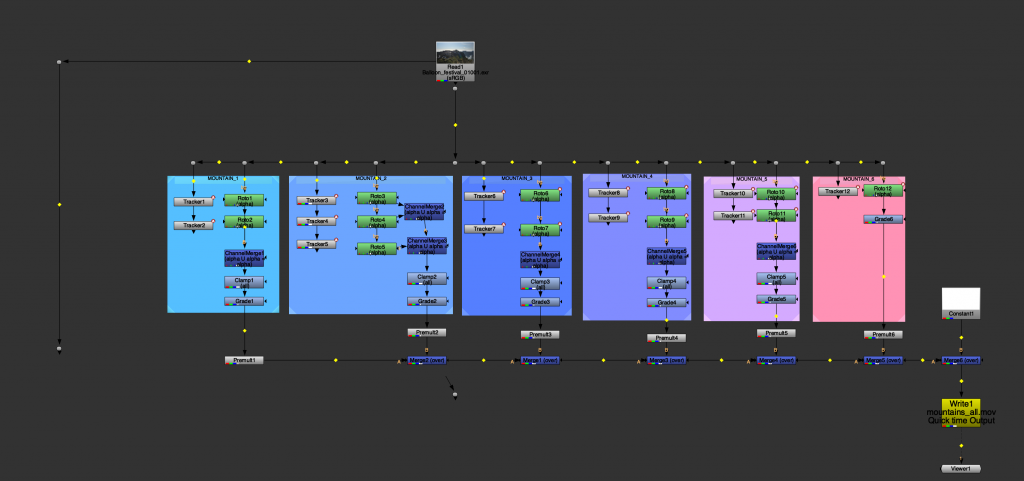
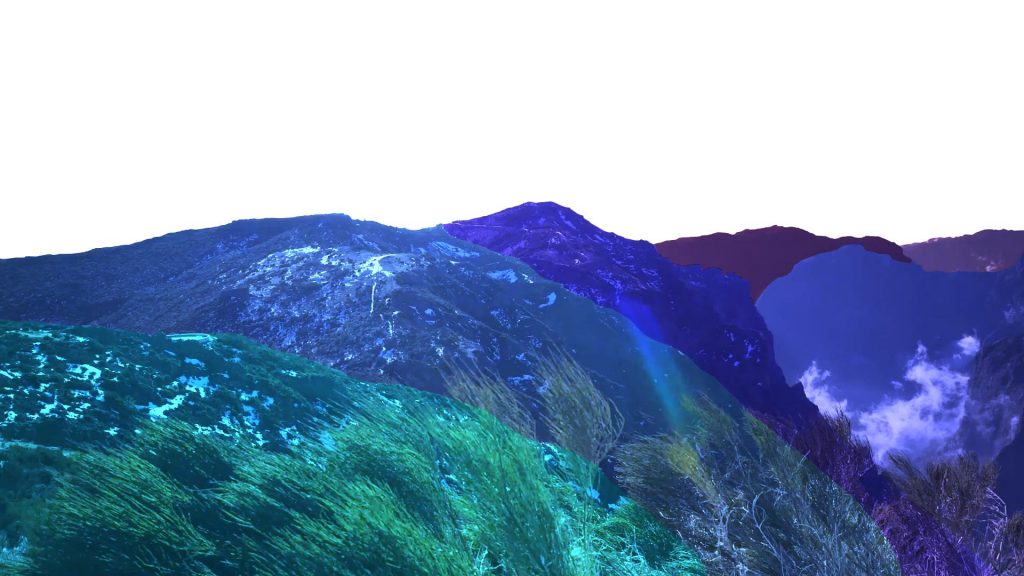
The task began with rotoscoping the mountain range in the provided plate. This stage allowed me to practice building clean, well-organized roto shapes, managing edge detail, and creating accurate mattes to separate depth layers within the scene. Working on this step in Nuke helped me better understand how precise rotoscoping supports downstream compositing tasks such as depth integration and environmental interaction between live-action and CG elements.
MODELLING THE BALLOONS
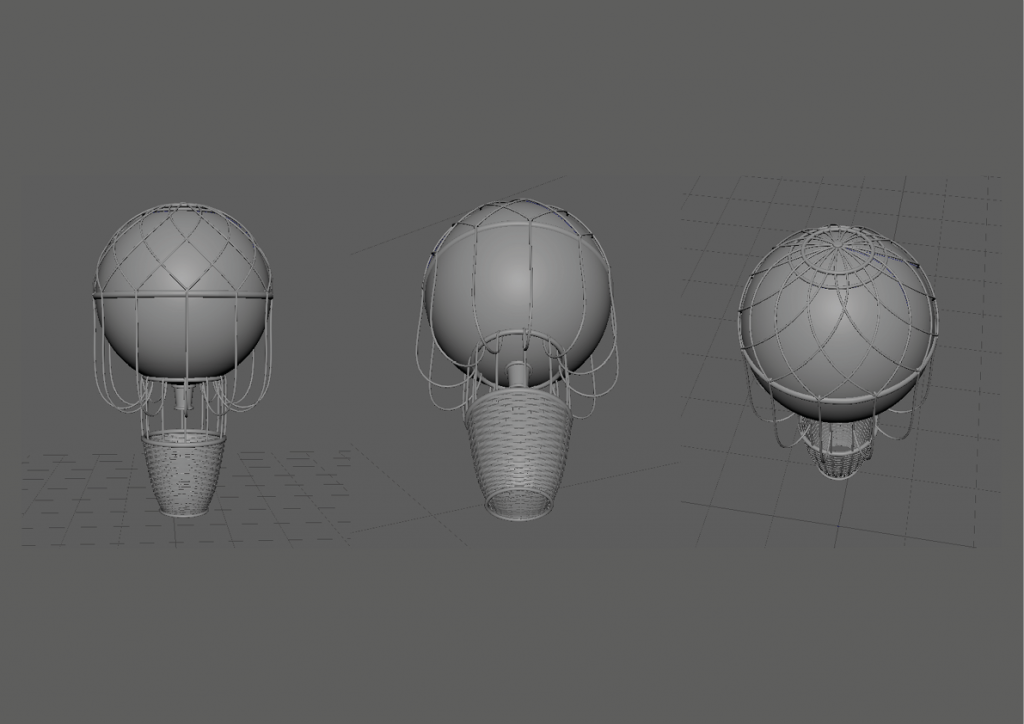
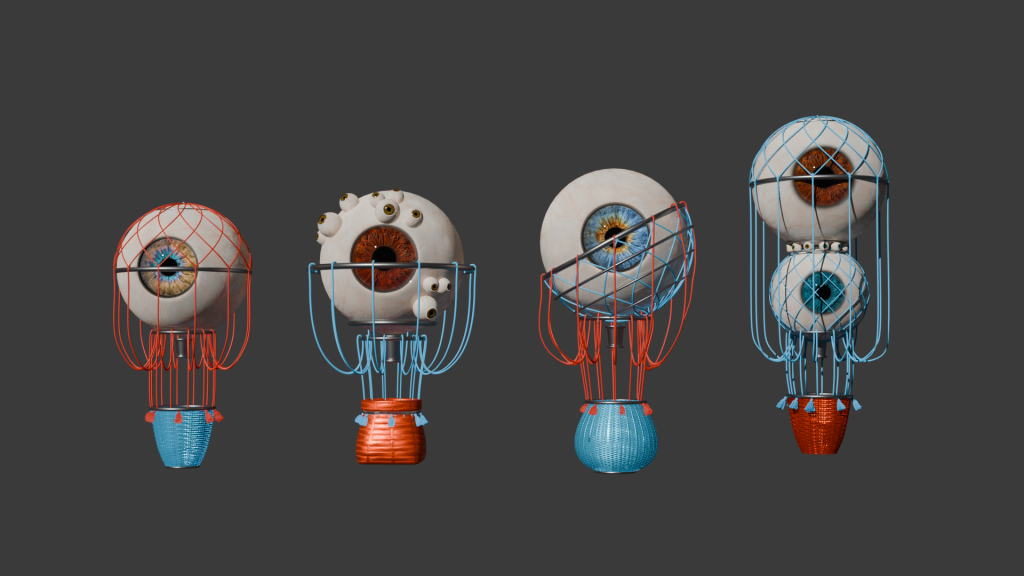
I modelled all of my balloons from scratch in Maya, and then textured, animated and rendered them in Blender.
FINAL OUTCOME
CREATIVE AND TECHNICAL HIGHLIGHTS
Creative Highlights
- Atmospheric Integration of CG Elements
Blending stylised balloons into a real landscape while maintaining a natural and believable look. - Sense of Depth and Scale
Using layering and placement to create a convincing sense of distance between foreground mountains and background sky. - Stylised Design Within Real Footage
Designing balloons that feel visually interesting while still fitting the tone and lighting of the live-action plate. - Subtle Motion & Composition
Positioning and animating the balloons in a way that enhances the scene without overwhelming it, contributing to a balanced composition.
Technical Highlights
- Rotoscoping for Depth Separation
Isolating the mountain range in Nuke to create a clean foreground/background split for proper layering. - 3D Asset Creation & Animation
Modeling, animating, and rendering stylised balloons in Maya and Blender. - Match Integration (Scale, Perspective, Lighting)
Ensuring the CG elements aligned correctly with the camera perspective and environmental lighting of the plate. - Compositing & Color Matching
Integrating renders into the footage in Nuke with attention to color balance.
LESSONS AND REFLECTIONS
- Rotoscoping as a foundation for depth
I learned how crucial clean roto is for establishing depth and allowing CG elements to sit convincingly within a scene. Even small inaccuracies can break the illusion. - Consistency in lighting and scale
Achieving believable results required careful observation of the original footage, particularly how light behaves and how scale is perceived across distance. - Balancing stylisation with realism
One of the key challenges was ensuring that the stylised balloons still felt grounded in a real environment, without looking out of place. - Understanding the relationship between 3D and compositing
This project helped me see how decisions made in 3D (lighting, rendering, animation) directly impact the compositing process in Nuke. - Building confidence with a new workflow
This project gave me a solid introduction to combining Blender, Maya and Nuke, and helped me feel more confident moving into more complex VFX tasks.